Affiliate Disclosure: This post contains affiliate links. If you buy through one of them, we may earn a small commission — at no extra cost to you. We only recommend kits we’ve actually researched and would suggest to a friend.
The Friend Who Never Trains for Marathons But Somehow Wins the Sprint
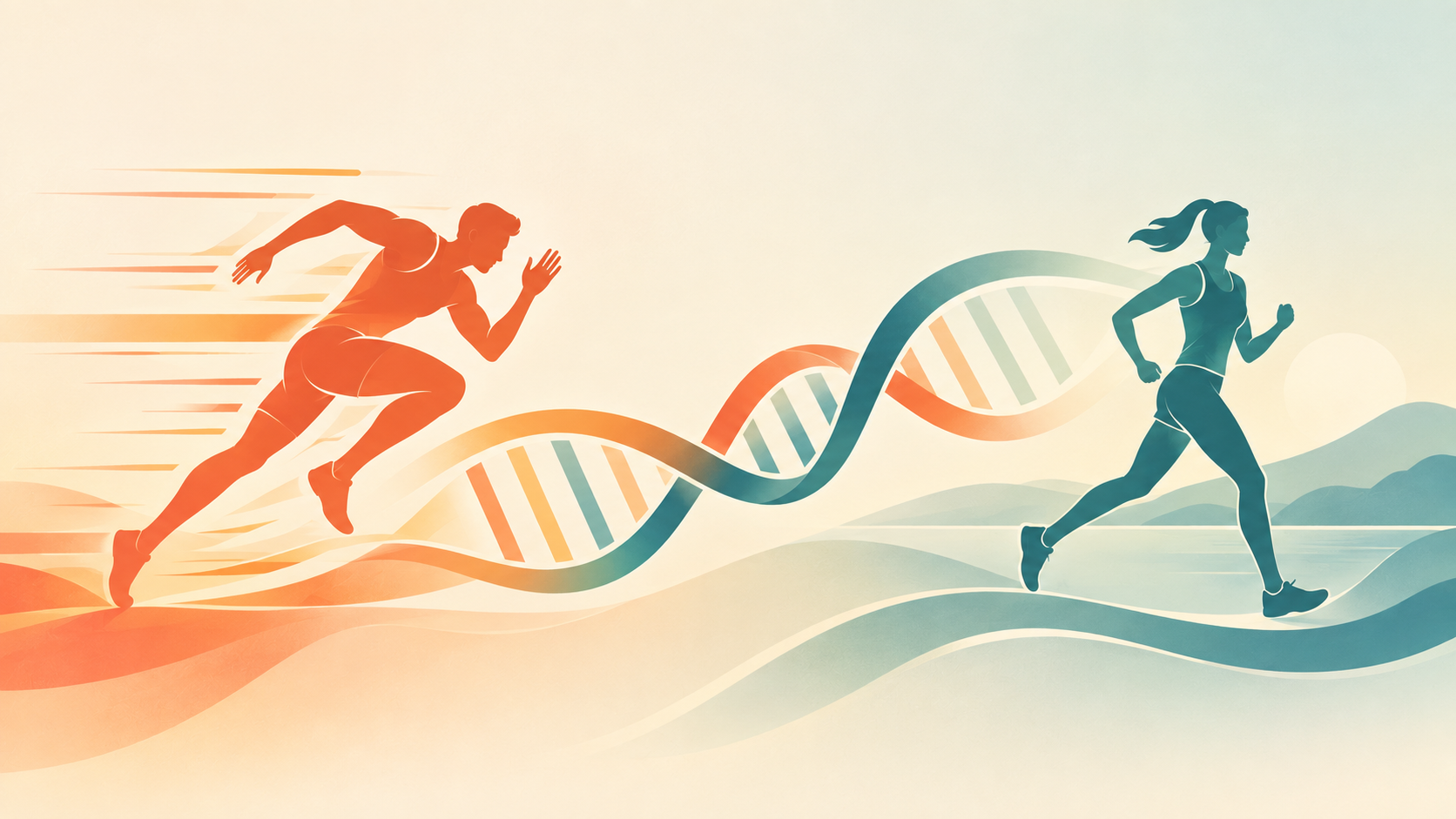
Every group of friends who exercises together seems to have one person like this: barely structured training, yet they’re first off the line in a short sprint, or conversely, they can run for hours at a steady pace while everyone else is gasping after ten minutes. Effort and training matter enormously, but there’s also a real, well-documented genetic component to why some bodies are naturally wired for explosive power and others for sustained endurance.
This isn’t about who’s a “better” athlete overall — it’s about which type of physical demand your body is genetically inclined to handle more efficiently, something researchers have been mapping out in increasing detail over the past two decades.
The Genetics Behind Power vs. Endurance
ACTN3 — the “sprinter gene.” This is probably the most well-known gene in athletic performance research. It affects a protein found in fast-twitch muscle fibers, the type responsible for quick, powerful movements like sprinting or jumping. People with a fully functioning version of this gene tend to have more efficient fast-twitch fiber function, which shows up disproportionately in elite sprinters and power athletes. People with a variant that produces little or none of this protein aren’t at a disadvantage overall — some research actually links this variant to better endurance performance instead.
ACE gene. The same gene involved in the blood pressure regulation covered elsewhere in this series also plays a role here, since it affects cardiovascular efficiency under exertion. Certain variants are associated with better endurance performance, while others lean more toward power and strength-based advantages — one gene, two different athletic profiles depending on which version you carry.
Muscle fiber type genetics more broadly. Beyond ACTN3 specifically, overall muscle fiber composition — the ratio of fast-twitch to slow-twitch fibers throughout the body — has a meaningful genetic basis. This ratio isn’t fixed forever, since training can shift it somewhat, but the genetic starting point matters for which direction that shift happens most easily.
VO2 max genetics. Aerobic capacity, or VO2 max, is one of the most heritable fitness-related traits studied, with genetics accounting for a substantial portion of the variation in how efficiently your body uses oxygen during sustained exercise. This is part of why two people following an identical endurance training program can see meaningfully different improvements.
Why This Matters Beyond Elite Sports
This research isn’t just relevant if you’re chasing a podium finish. Understanding your genetic leanings can help explain years of frustration with a workout style that never clicked. Someone with a genetic profile favoring power and fast-twitch dominance who’s spent years trying to love long-distance running may simply be working against their own biology, while someone with an endurance-leaning profile might find that heavy, low-rep strength training never quite delivers the results they see other people get.
None of this means you should avoid a type of training you enjoy — cross-training has real benefits regardless of genetic profile. But it can help set more realistic expectations and explain why identical effort sometimes produces different results between training partners.
Athletic Genetics Doesn’t Exist in Isolation
Performance genetics connects closely to some of the other traits covered in this series. Muscle recovery speed and inflammatory response play a real role in how quickly you can train again after a hard session, which matters just as much as raw fiber type for long-term progress. Cardiovascular tendencies — the same blood pressure genetics covered elsewhere — also factor into how your heart and vascular system respond to sustained exertion over time.
What Genetics Doesn’t Determine
Genetics sets a tendency, not a ceiling. Consistent training, proper nutrition, recovery, and sport-specific technique all have a massive, well-documented impact on athletic performance independent of genetic starting point. Plenty of elite endurance athletes don’t carry the “ideal” endurance genetic profile, and plenty of powerful, explosive athletes lack the classic sprinter variant. Genetics shifts the odds and explains some of the natural ease or difficulty, but it doesn’t write the outcome on its own.
Where a DNA Test Fits Into This
A wellness-focused DNA test won’t tell you whether you’ll win a race, but it can offer real context on whether your body may be more naturally inclined toward power-based or endurance-based training — useful information for deciding where to focus your effort, or simply for understanding why a particular training style has always felt more natural.
DNApower includes fitness and muscle-related genetic markers as part of its broader wellness panel, covering tendencies connected to muscle fiber type and exercise response alongside the recovery and metabolic factors covered elsewhere in this series.
Practical Steps Based on Your Genetic Tendency
If your genetics lean toward power and fast-twitch dominance, structuring training around shorter, higher-intensity efforts — sprint intervals, heavier resistance work — tends to play to your natural strengths, while still building some aerobic base for overall health.
If your genetics lean toward endurance, steady-state cardio and higher-volume, lower-intensity training may deliver more noticeable results relative to the effort involved, though incorporating some strength and power work remains valuable for injury prevention and overall fitness.
Regardless of genetic tendency, consistency remains the single biggest factor in long-term athletic improvement — genetics shifts how efficiently a given type of training pays off, not whether training itself works.
Frequently Asked Questions
Does not having the “sprinter gene” mean I can’t get faster? No. ACTN3 status influences natural tendency, not your ceiling for improvement. Plenty of people without the classic sprinter variant still improve their speed and power significantly through consistent training.
Can genetic testing tell me which sport I should play? Not precisely. It can offer context about power vs. endurance leanings and recovery tendencies, but sport selection depends on far more than genetics alone, including skill, interest, and access to training.
Is athletic performance genetic testing the same as testing used by professional sports teams? Not typically. Consumer wellness panels look at a curated set of well-studied markers, while some professional and research settings use more extensive, specialized genetic panels focused specifically on elite performance prediction.
The Bottom Line
If a particular type of training has always felt more natural to you than another, genetics may be part of the real explanation — not a sign you’re doing something wrong or not trying hard enough. Understanding whether your body leans toward power or endurance can help you train smarter and set expectations that actually match your biology, rather than chasing results built for someone else’s genetic starting point.
If you’re curious about your own genetic tendencies around fitness, muscle type, and recovery, DNApower’s wellness panel is a reasonable place to start, alongside working with a coach or trainer who can help translate that context into an actual program.
コメントを残す