Affiliate Disclosure: This post contains affiliate links. If you buy through one of them, we may earn a small commission — at no extra cost to you. We only recommend kits we’ve actually researched and would suggest to a friend.
The Baby Whose Eyes Didn’t Match Anyone’s
Ask new parents what they’re most curious about, and eye color is usually near the top of the list. Will the baby have Mom’s brown eyes, Dad’s hazel eyes, or Grandma’s striking blue ones? And sometimes the answer surprises everyone — two brown-eyed parents end up with a blue-eyed child, or a baby’s eyes change color completely during their first year.
Eye color is clearly inherited, but it doesn’t follow the simple rules many of us learned in school. It’s shaped by several genes working together, and some versions of those genes can stay hidden for generations before showing up again.
This article explains where eye color comes from, which genes matter most, why babies’ eyes often change, and what eye color can — and can’t — tell you about your eye health.
Where Eye Color Comes From
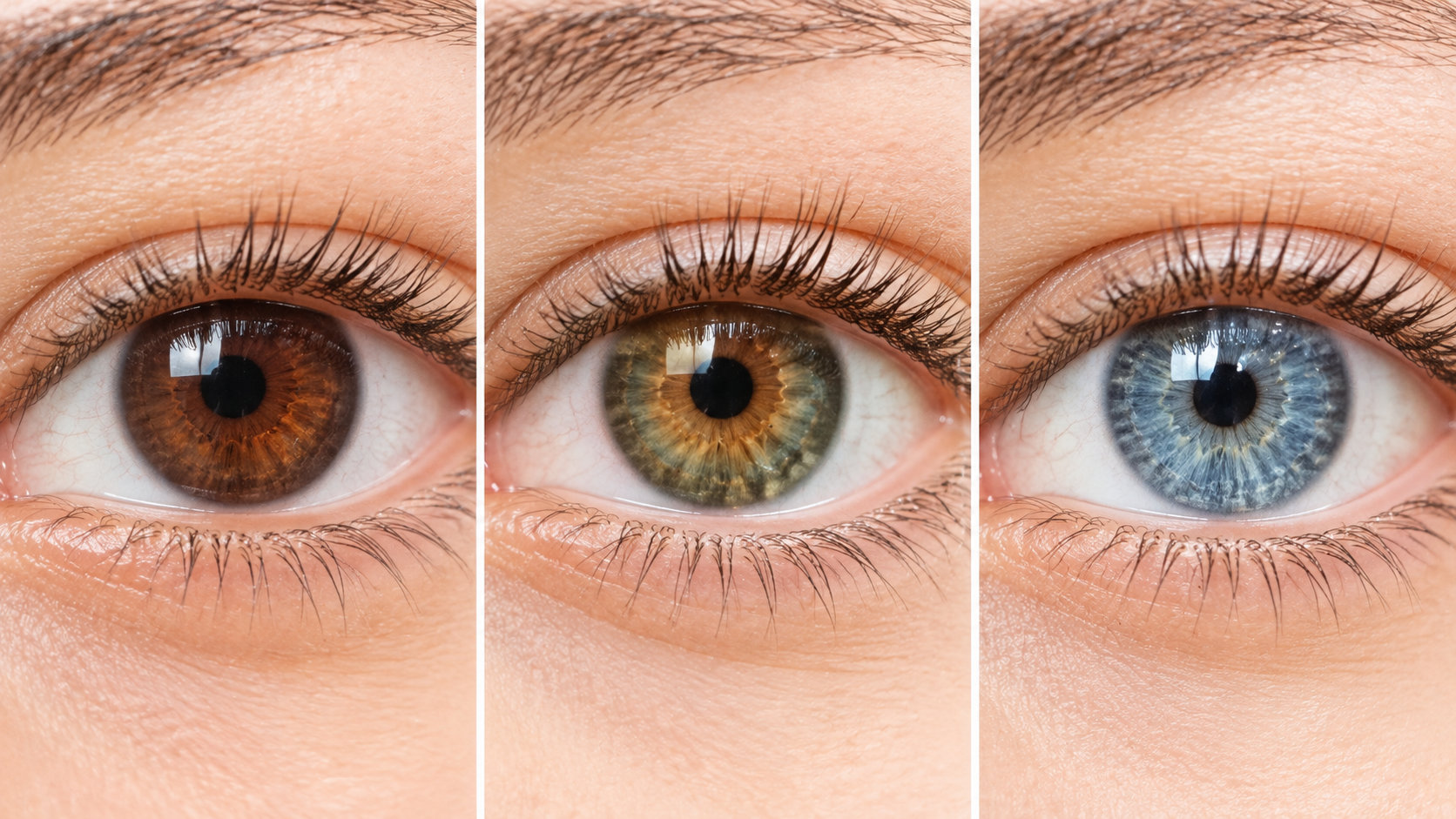
Your eye color depends on the iris, the colored ring around your pupil. The main factor is how much melanin — the same pigment that colors your skin and hair — is stored in the front layer of the iris.
Brown eyes have a lot of melanin, which absorbs most light and gives a deep, dark color.
Hazel and green eyes have a moderate amount of melanin, often combined with a yellowish pigment and the way light scatters through the iris.
Blue eyes have very little melanin in the front of the iris. Surprisingly, there’s no blue pigment in blue eyes at all. The color comes from the way light scatters as it passes through the iris — a similar effect to the one that makes the sky look blue.
Gray eyes are thought to have even less melanin, with differences in how light scatters producing a gray rather than blue appearance.
So eye color isn’t really about different pigments. It’s mostly about how much of one pigment you have — and that amount is controlled by your genes.
Why It’s Not as Simple as “Brown Beats Blue”
Many people learned that brown eyes are dominant and blue eyes are recessive, as if one gene decided everything. That model works reasonably well for predicting brown versus blue in many families, but it falls apart when you look closer.
Large genetic studies have identified dozens of genetic regions linked to eye color. Each contributes a little, and together they create the full range from deep brown to pale blue, with hazel, green, and every shade in between.
That’s why siblings can have noticeably different eye colors, and why eye color doesn’t always match what you’d expect from looking at the parents. The way hidden gene versions get passed down works on a similar principle to the inheritance patterns we explained in our article on blood type genetics — a parent can carry a version of a gene that doesn’t show in them but appears in a child who inherits it from both sides.
The Genes That Matter Most
OCA2. This gene helps make a protein involved in producing and storing melanin. People with more OCA2 activity tend to have more melanin in their irises — and darker eyes.
HERC2. This neighboring gene acts like a switch for OCA2. One particular variant in HERC2 turns OCA2 activity down in the iris, leading to less melanin and lighter eyes. This single variant explains a large share of the difference between blue and brown eyes, especially in people of European descent.
Researchers have suggested that this blue-eye variant may trace back to a single common ancestor who lived several thousand years ago, likely somewhere near the Black Sea region. If that’s right, many blue-eyed people today share a very distant relative.
Other genes. Genes like TYR, SLC24A4, SLC45A2, and IRF4 also influence eye color, mainly by affecting melanin production. They help explain the many shades of hazel and green, and why eye color can vary so much even within one family.
Can Two Brown-Eyed Parents Have a Blue-Eyed Child?
Yes. If both parents carry a hidden version of the light-eye variant, each can pass it to their child. A child who inherits it from both sides may have blue eyes, even though both parents have brown eyes.
What about the reverse? Two blue-eyed parents usually have blue-eyed children, but because so many genes are involved, it’s possible — though uncommon — for them to have a child with green, hazel, or even light brown eyes.
Why Babies’ Eyes Often Change Color
Many babies, especially those of European descent, are born with blue or gray eyes. That’s because the melanocytes in their irises haven’t produced much melanin yet. Over the first months of life, melanin production often increases, and eyes may darken to green, hazel, or brown.
Most of this change happens in the first year, though some children’s eyes continue to shift slightly until around age three. Babies of African, Asian, and Hispanic descent are more often born with brown eyes that stay brown.
So if your baby was born with blue eyes, it’s best not to assume they’ll stay that way — at least not until their first birthday.
How Common Is Each Eye Color?
Worldwide, brown is by far the most common eye color, found in a large majority of people. Blue eyes are much more common in Northern and Eastern Europe, where they can be the majority in some countries. Green is often described as the rarest of the common eye colors, found in only a small percentage of people worldwide.
Can Your Eye Color Change as an Adult?
For most people, eye color settles in early childhood and stays fairly stable. Lighting, clothing, and makeup can make eyes look slightly different, and some people notice subtle changes over many years.
But a noticeable change in eye color in adulthood — especially in only one eye — isn’t normal and is worth checking with an eye doctor. It can sometimes be linked to inflammation, injury, certain eye conditions, or medications. For example, some glaucoma eye drops can gradually darken the iris.
Heterochromia, where someone has two different-colored eyes or more than one color in the same eye, is usually harmless and often present from birth. If it appears later in life, though, it should be checked.
What Eye Color Can Tell You About Eye Health
Eye color is mostly about appearance, but the amount of melanin in your iris can have some effects on eye health.
Light sensitivity. People with lighter eyes often find bright light and glare more uncomfortable, since there’s less pigment to absorb light.
Some eye conditions. Lighter eye color has been linked to a higher risk of certain conditions, including a rare type of eye cancer called uveal melanoma and age-related macular degeneration. These links don’t mean people with light eyes will develop these conditions, but they’re a good reason to wear sunglasses with UV protection.
Color vision. Eye color has no effect on how well you see colors. Color blindness comes from differences in the light-sensing cells at the back of the eye, not the iris. We explained how it’s inherited in our article on why color blindness almost always comes from Mom’s side.
Nearsightedness. Eye color also has nothing to do with whether you need glasses. Nearsightedness depends mainly on the shape of the eye, and it has its own strong genetic patterns, which we covered in our article on why everyone in your family wears glasses.
Myths About Eye Color
Blue eyes are a recessive trait controlled by one gene. It’s more complicated. One gene variant has a large effect, but many genes contribute.
Eye color can’t skip a generation. It can. Hidden gene variants can reappear in grandchildren.
People with light eyes see worse. Eye color doesn’t affect how sharply you see, though light eyes may be more sensitive to glare.
Eye color changes with your mood. Your pupils can change size with emotions or light, which may make your eyes look slightly different, but the color of your iris doesn’t actually change.
Where a DNA Test Fits Into This
Some consumer DNA tests include trait reports that predict eye color. These are usually fairly accurate for distinguishing brown from blue, but less precise for in-between shades like hazel and green, since so many genes are involved.
If you’re more interested in health than appearance, a wellness-focused test like DNApower covers areas like diet, vitamin absorption, and exercise response. It doesn’t focus on eye color, but it can give you insight into other ways your genes shape everyday health.
Frequently Asked Questions
Is eye color determined by one gene? No. Several genes are involved, though OCA2 and HERC2 have the biggest effect, especially on whether eyes are brown or blue.
Can two brown-eyed parents have a blue-eyed baby? Yes, if both parents carry a hidden variant for lighter eyes and pass it to their child.
When do babies’ eyes stop changing color? Most changes happen in the first year, though eye color can continue to shift slightly until around age three.
Is green the rarest eye color? Green is often considered the rarest of the common eye colors worldwide, though it’s more common in some parts of Europe.
Should I worry if my eye color changes as an adult? A noticeable change, especially in one eye, should be checked by an eye doctor, since it can sometimes be linked to eye conditions or medications.
The Bottom Line
Eye color is one of the most familiar inherited traits, but it’s more complex than the simple “brown beats blue” rule. Several genes — led by OCA2 and HERC2 — control how much melanin your irises contain, which is why eye color can skip generations and why babies’ eyes often change during their first year. Beyond appearance, eye color has a few links to eye health, so protecting your eyes from bright sun is a good habit, especially if yours are light.
If you’d like to explore how your genes shape other areas of your health, DNApower’s wellness panel is a reasonable place to start.