Affiliate Disclosure: This post contains affiliate links. If you buy through one of them, we may earn a small commission — at no extra cost to you. We only recommend kits we’ve actually researched and would suggest to a friend.
Siblings, Same Parents, Completely Different Hair
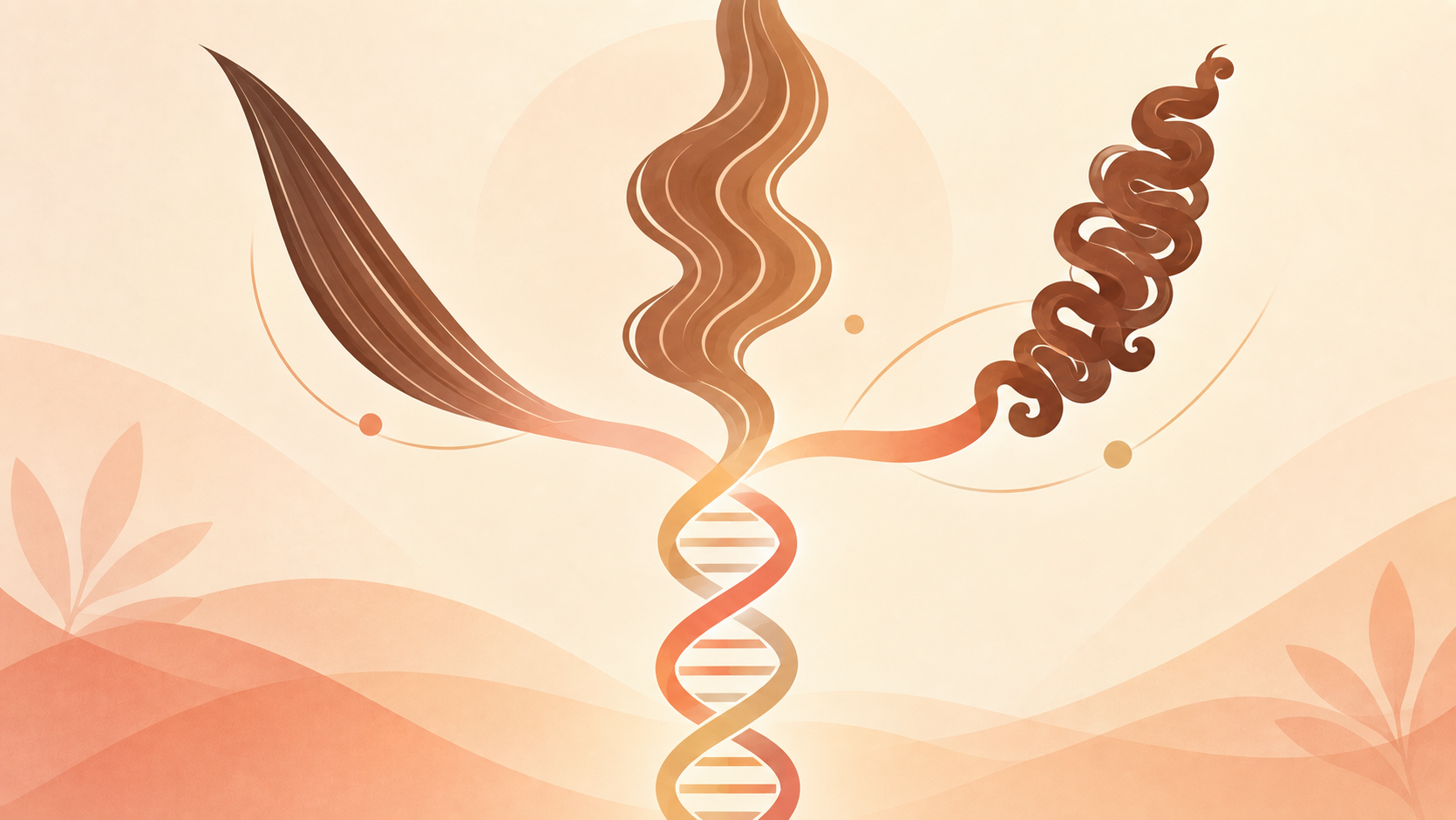
It’s a familiar scene in a lot of families: one sibling with poker-straight hair, another with loose waves, and a third with tight curls, all raised in the same household with the same shampoo in the shower. Hair texture is one of those traits people assume must be simple — straight parents make straight-haired kids, curly parents make curly-haired kids — but the actual genetics involved are considerably more layered than that, which is exactly why texture can vary so much within one family.
The Shape of the Follicle Decides the Shape of the Strand
The physical explanation for hair texture comes down to the shape of the hair follicle itself. A rounder, more symmetrical follicle produces straighter hair, since the strand grows out evenly in all directions. A more oval or asymmetrical follicle causes the strand to grow unevenly, curving as it emerges — the more pronounced that asymmetry, the tighter the resulting curl pattern. This is a purely mechanical, physical explanation, but the follicle shape itself is substantially influenced by genetics.
The Genes Behind Hair Texture
TCHH gene (trichohyalin). This is one of the most studied genes in hair texture research, involved in structuring the protein matrix inside the hair shaft. Certain variants are strongly associated with straighter hair texture, particularly well-documented in populations of European and East Asian descent.
WNT10A gene. This gene plays a role in hair follicle development more broadly, and variants here have been linked to differences in hair thickness and texture, adding another layer to the overall genetic picture beyond TCHH alone.
EDAR gene. Beyond texture specifically, this gene affects hair thickness and is one of the more well-known examples of a single gene with a measurably large effect on a visible trait, with a specific variant common in East Asian populations linked to thicker hair strands.
Multiple additional variants. Similar to the pattern seen in pattern baldness genetics covered elsewhere in this series, hair texture isn’t controlled by one dominant gene alone — it’s polygenic, meaning multiple genes with individually smaller effects combine to produce the final result, which is a big part of why texture can vary so much even between siblings who share the same two parents.
Why Siblings Can Look So Different
Because multiple genes from both parents each contribute a partial effect, children can inherit different combinations of texture-related variants from each parent, producing a wider range of outcomes than a simple “curly is dominant” or “straight is dominant” model would predict. Two parents with wavy hair can have one child with notably straighter hair and another with noticeably curlier hair, simply based on which specific combination of variants each child happened to inherit.
Texture Can Also Change Over a Lifetime
Hair texture isn’t always fixed from birth to death the way people assume. It’s common for texture to shift somewhat during puberty, pregnancy, and again with aging, as hormonal changes affect follicle shape and hair protein structure over time — a phenomenon sometimes informally called “hair texture change” that has a real hormonal and, to some extent, genetic basis, even though the underlying DNA sequence itself hasn’t changed. This is different from hair thinning or loss, which involves a separate set of genetic and hormonal factors covered in our piece on pattern baldness.
What Genetics Doesn’t Fully Determine
Humidity, hair care products, heat styling, and overall hair health from nutrition and scalp condition can all meaningfully affect how a given genetic texture actually presents day to day. Someone with a genetic tendency toward curlier hair can see that pattern look dramatically different depending on humidity and product choice, and healthy hair care practices tend to help any texture type look and behave better, regardless of the underlying genetic starting point.
Where a DNA Test Fits Into This
Hair texture isn’t typically a headline feature of most consumer wellness or ancestry DNA kits, including DNApower, which focuses more on metabolic, nutritional, and fitness-related genetic markers rather than physical appearance traits like this one. Some direct-to-consumer traits reports do include hair texture as a novelty feature, though the underlying science, while real, is still less thoroughly mapped than more heavily studied traits like the ones covered elsewhere in this series.
Frequently Asked Questions
If both my parents have straight hair, can I have curly hair? Yes, it’s possible, though less common. Because multiple genes contribute to texture, and each parent carries a mix of variants that isn’t always visible in their own hair, a child can inherit an unexpected combination that produces different texture than either parent visibly shows.
Does hair texture really change with age? Yes, to a real degree for many people. Hormonal shifts during puberty, pregnancy, and aging can alter follicle shape and hair protein structure enough to noticeably change texture over time, separate from any change in the underlying genetic code.
Is curly hair “coded” as recessive and straight hair “dominant,” like eye color used to be taught? Not accurately, no. This oversimplified model doesn’t reflect how hair texture actually works — it’s polygenic, involving multiple genes with individually smaller effects rather than one simple dominant-recessive pair.
The Bottom Line
If your family’s hair textures look nothing alike despite everyone sharing the same parents, there’s a real, well-documented genetic explanation — hair texture involves multiple genes working together rather than one clean inherited trait, which is exactly why the outcome can vary so much even within a single family. It’s a good reminder that plenty of visible, everyday traits are more genetically complex than the simplified version most of us learned in school.
If you’re curious about the genetic traits that are well-mapped enough to appear in consumer wellness testing, DNApower’s wellness panel covers metabolism, fitness, and other established health-related markers.