タグ: DNA test accuracy

  • If I Retake a DNA Test, Will I Get the Same Results?

    If I Retake a DNA Test, Will I Get the Same Results?

    Affiliate Disclosure: This post contains affiliate links. If you buy through one of them, we may earn a small commission — at no extra cost to you. We only recommend kits we’ve actually researched and would suggest to a friend.

    A Reasonable Question Nobody Really Answers Upfront

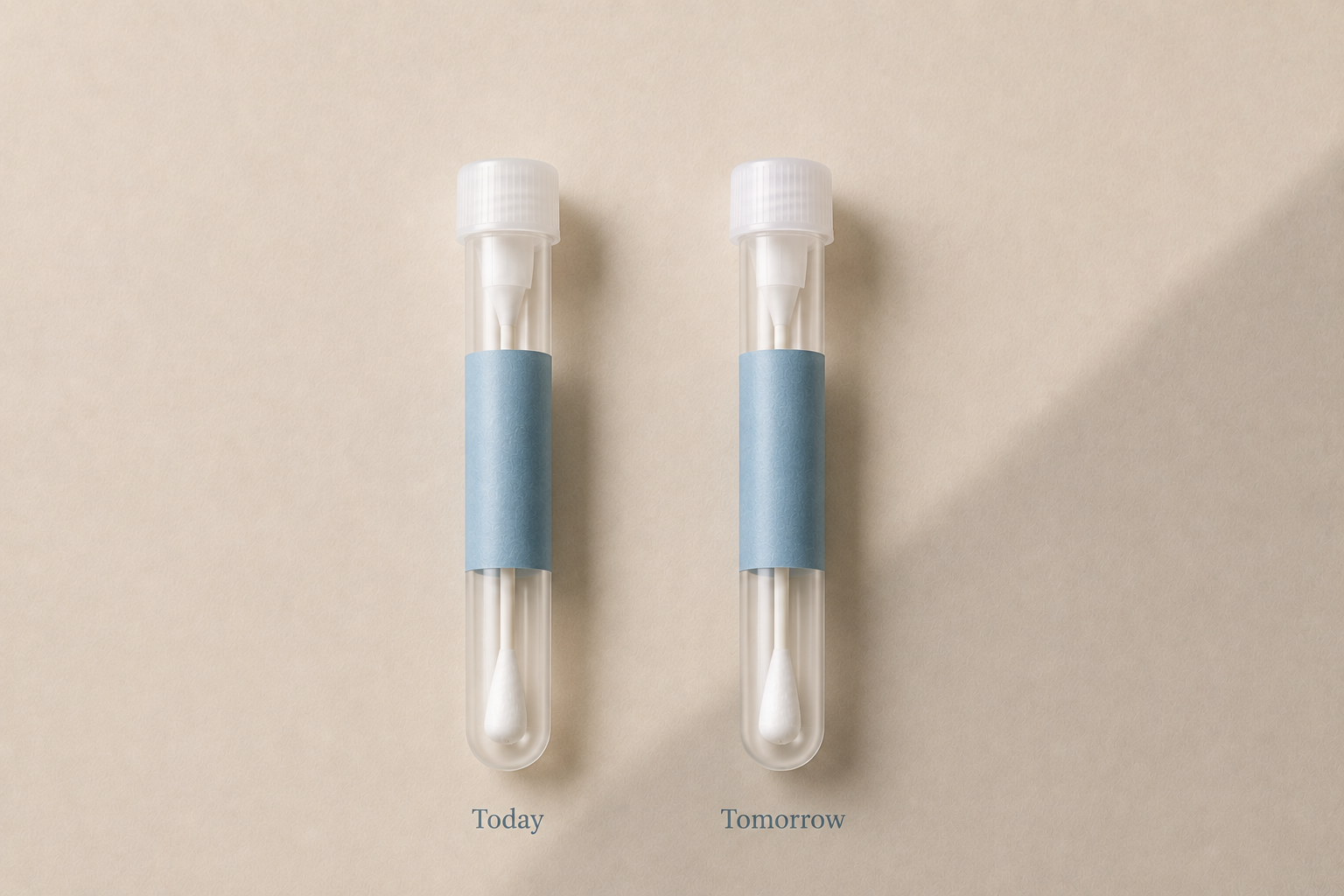
    You’ve probably wondered this at some point, especially if you’ve seen someone mention their ethnicity percentages shifted after a year or two: if you sent in a second sample to the same company tomorrow, would you get the exact same numbers back? The honest answer is more nuanced than a simple yes or no, and understanding why can save you some genuine confusion down the road.

    The Short Answer: Mostly Yes, With a Few Exceptions

    Your actual raw DNA data — the underlying genetic code the lab reads — doesn’t change. If you tested with the same company twice using two separate samples, the raw genetic reading itself would be effectively identical, since it’s reading the same DNA both times. This part is genuinely stable and reliable.

    What can differ between a first test and a retest, sometimes noticeably, is the interpretation layered on top of that raw data — specifically your ethnicity percentages and, in some cases, health-related risk calculations.

    Why Ethnicity Percentages Specifically Can Shift

    This comes down to how ethnicity estimates are actually calculated. Your raw DNA is compared against a reference database — a collection of DNA samples from people with well-documented ancestry from specific regions. As companies test more people and refine their reference panels over time, the underlying comparison data improves, and estimates get recalculated against that improved data.

    This means if you retested a year or two later, your ethnicity breakdown could genuinely come back somewhat different — not because your original test was wrong, or because the retest is more accurate in some absolute sense, but because the comparison data itself has evolved. It’s closer to updating a map with better surveying data than correcting an error.

    What About Retesting on the Same Day or Same Week?

    If you sent in two samples close together, before any reference database update occurred, results would typically be extremely consistent — small variations are possible due to normal technical variance in lab processing, but nothing that would meaningfully change your overall picture.

    Does This Apply to DNA Matches Too?

    Relative matches are generally more stable than ethnicity percentages, since they’re based on directly comparing shared DNA segments with other testers rather than a broader statistical estimate. That said, your match list can genuinely grow over time as more people join the same company’s database — which isn’t your results “changing” so much as the pool of people you’re being compared against expanding.

    What About Wellness or Health-Related Results?

    For wellness-focused tests like DNApower, the underlying genetic markers being read are stable in the same way ancestry data is — your genetic code doesn’t change. However, as research on specific gene-trait or gene-condition associations develops over time, companies occasionally update how they interpret certain markers, which could theoretically affect how a report is worded or categorized in a future version, even though the raw genetic finding itself hasn’t changed.

    Is It Worth Retesting With the Same Company?

    For most people, no — not specifically to check for consistency. Since your raw DNA doesn’t change, there’s little value in paying for a second kit from the same company purely to verify your first results are “correct.” A more useful reason to retest would be checking back in on your existing account after a few years to see if your ethnicity estimate has been updated with improved reference data, which most companies do automatically without requiring a whole new sample.

    Testing with a different company, on the other hand, is a genuinely different situation — since each company uses its own separate reference database and matching pool, testing with a second company can provide new information (different regional detail, access to a different set of potential relatives) rather than simply confirming what you already know.

    A Practical Takeaway

    If your ethnicity percentages shift after a year or two, that’s a sign your testing company’s reference database has grown and improved — not a sign something went wrong with your original test. If you’re specifically hoping for more precision or a different set of relative matches, testing with a different company (or uploading your raw data to a platform that accepts it) is generally a more productive use of your money than retesting with the same one.

    Frequently Asked Questions

    Will my DNA test results ever expire or need updating? Your raw genetic data doesn’t expire, but most companies periodically recalculate your ethnicity estimate as their reference databases improve, which happens automatically without needing a new sample.

    Is it worth paying for a second kit from the same company to double-check accuracy? Generally not necessary, since your raw DNA reading doesn’t change between tests. If you want more information, testing with a different company usually provides more genuinely new insight than retesting with the same one.

    Why do siblings sometimes get noticeably different results even when tested at the same time? This isn’t related to retesting consistency — it’s because siblings inherit different random halves of their parents’ DNA, so their results can differ meaningfully from each other even on a first test, let alone compared across different companies.

    The Bottom Line

    Your underlying DNA reading is reliable and consistent between tests with the same company. What shifts over time is the interpretation layered on top — particularly ethnicity percentages — as reference databases grow and improve. Understanding this distinction helps make sense of a result that looks different a year or two later, without mistaking normal database evolution for an error in your original test.

    If you’re considering testing with a second company to expand your results, our [comparison of the major DNA testing kits]can help you choose which one to try next.

  • How Accurate Are DNA Tests? Which Kit Is Most Reliable in 2026

    How Accurate Are DNA Tests? Which Kit Is Most Reliable in 2026

    Affiliate Disclosure: This post contains affiliate links. If you buy through one of them, we may earn a small commission — at no extra cost to you. We only recommend kits we’ve actually researched and would suggest to a friend.

    The Question Everyone Asks, Nobody Fully Answers

    “But is it actually accurate?”

    I’ve heard some version of that question more than any other when DNA testing comes up. It makes sense — you’re mailing a piece of yourself to a company and trusting them to tell you something true about who you are. That deserves a real answer, not a marketing slogan.

    So here’s the honest, unglamorous breakdown of what “accuracy” actually means in this context, and where the fuzzy edges are.

    First, What Kind of Accuracy Are We Even Talking About?

    This is where a lot of confusion starts. “DNA test accuracy” isn’t one single number — it splits into a few very different questions:

    Is the raw genetic data accurate? Yes, almost always. The lab process itself — reading your DNA at hundreds of thousands of specific points — is highly reliable and has been for years. This part is genuinely solid science.

    Is the ethnicity estimate accurate? This is where it gets murkier. The estimate is a statistical best-guess, not a fact, and it depends entirely on what your DNA is being compared against.

    Are the relative matches accurate? Generally yes for close relatives (parents, siblings, first cousins), and progressively less certain the more distant the relationship gets.

    Keeping these three separate clears up most of the confusion people have.

    Why Ethnicity Percentages Aren’t as Fixed as They Look

    Here’s the part that surprises people most: your ethnicity estimate can change over time, even though your DNA hasn’t.

    That’s because these percentages are calculated by comparing your DNA against a reference panel — a database of people with well-documented ancestry from specific regions. As companies test more people and their reference panels grow more detailed, the algorithm re-evaluates everyone’s results against the improved data. It’s common to test today, then see your percentages shift slightly a year or two later.

    This isn’t a sign the original test was wrong. It’s more like updating a map as new surveying data comes in — the borders get sharper, not the underlying land.

    There’s also a technical reason two siblings can get noticeably different ethnicity results, despite sharing parents. You inherit roughly 50% of your DNA from each parent, but which 50% is random. Full siblings typically share about half their DNA with each other, not all of it — so it’s entirely normal for one sibling’s report to show more “Scandinavian” ancestry than the other’s, purely from the luck of genetic inheritance.

    Where Companies Genuinely Differ

    Not all reference databases are built the same way, and that directly affects how sharp — or blurry — your results will be.

    A company with a huge number of testers from Western Europe and North America will generally give you a confident, detailed breakdown if that’s where your ancestry lies. The same company might give you a much vaguer picture — a broad “Sub-Saharan African” or “East Asian” category — if your background sits outside its strongest reference regions, simply because it has fewer comparison points there.

    This is part of why brand comparisons matter so much in this space. It’s not that one company is more “honest” than another; they’re working from different maps, and your results will only be as detailed as the map allows. If you’re still deciding which company fits your background best, our full comparison of the major DNA testing kits breaks down where each one’s database is strongest.

    What About Health-Related Results?

    Health-focused genetic reports — the kind offered by companies like 23andMe or DNApower — work differently from ancestry estimates, and it’s worth understanding the distinction.

    These reports typically look at specific, well-studied genetic markers linked to particular conditions or traits. For markers with strong, established research behind them, the underlying genetic reading is reliable. But genetics is only one part of most health outcomes — environment, lifestyle, and other factors play a role too. A report showing “increased genetic likelihood” of something isn’t a diagnosis, and it isn’t a guarantee either way.

    This is also an area where the science is actively evolving. Some traits have decades of research behind them; others are based on newer, smaller studies that may be revised as more data comes in.

    So How Much Should You Trust Your Results?

    A useful way to think about it: trust the close relative matches and the raw data almost completely. Treat ethnicity percentages as a well-informed estimate that may shift over time. And treat health-related genetic insights as one data point among many, not a verdict — worth discussing with a doctor if something specific comes up, not something to self-diagnose from.

    None of that means DNA testing isn’t worth doing. It means going in with realistic expectations about what each part of the results actually represents.

    A Few Ways to Get More Reliable Results

    Test with a company that has strong representation for your background. If you know your ancestry leans heavily toward a specific region, research which company’s database is deepest there before choosing.

    Consider testing with more than one company. Since each company only matches you against its own database, testing with two can surface relatives — and sometimes a more complete ancestry picture — that one company alone would miss.

    Revisit your results periodically. Since reference databases update regularly, checking back in a year or two can sometimes sharpen a previously vague estimate.

    Frequently Asked Questions

    Why did my DNA results change after a year? This is normal and expected. As companies expand and refine their reference databases, your ethnicity estimate is recalculated against the improved data, which can shift your percentages without any error having occurred.

    Can two siblings get different DNA test results? Yes, and it’s completely normal. Siblings inherit different random halves of each parent’s DNA, so their ethnicity breakdowns and relative matches can vary meaningfully even though they share the same parents.

    Are health-related DNA reports as accurate as ancestry results? They measure different things. The underlying genetic reading is reliable, but health outcomes depend on more than genetics alone, so these reports should be treated as one input, not a diagnosis.

    The Bottom Line

    DNA testing is genuinely good science wrapped in a lot of marketing language that oversimplifies what the results actually mean. The raw data is trustworthy. The interpretation — especially ethnicity percentages — is a confident estimate, not a fixed fact. Once you understand which part of your results falls into which category, the whole experience makes a lot more sense.

    If you’re ready to start comparing your options, take a look at our side-by-side breakdown of the leading DNA testing kits to see which one lines up best with what you’re hoping to learn.