Affiliate Disclosure: This post contains affiliate links. If you buy through one of them, we may earn a small commission — at no extra cost to you. We only recommend kits we’ve actually researched and would suggest to a friend.
Your First DNA Kit Is Sitting on the Counter. Now What?
Maybe someone gave it to you as a gift. Maybe you finally clicked “buy” after weeks of research. Either way, there’s a decent chance the box is sitting there while you wonder what you actually signed up for.
This is the walkthrough I wish existed before my first kit — what actually happens, in order, from unboxing to reading your results.
Before You Even Open the Box
Pick your goal first, not the brand. The single biggest mistake first-timers make is choosing a kit based on price or a friend’s recommendation, without first deciding what they actually want to learn — ancestry, health, or both. That choice should come before the brand choice, not after.
Check the collection method. Kits use either a saliva sample (spit into a tube) or a cheek swab. If you have trouble producing saliva on demand, or you’re testing a child, a swab-based kit tends to be easier to manage.
Register the kit before you use it. Almost every company requires you to create an online account and activate the kit’s unique barcode before you collect your sample. Skipping this step is the single most common reason people delay their results — the lab can’t process an unregistered sample.
The Collection Process Itself
This part is faster and less unpleasant than most first-timers expect.
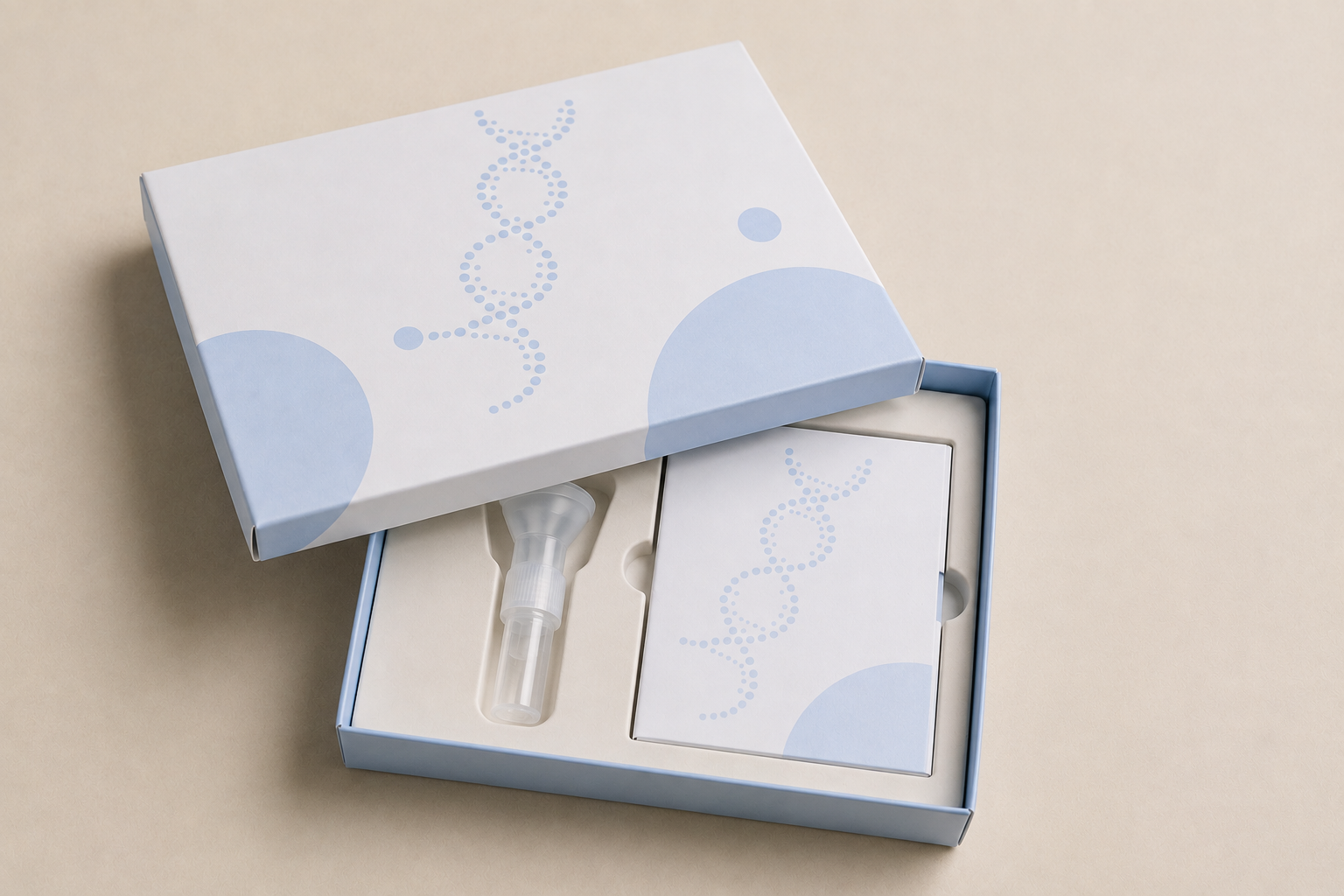
For saliva kits, you’ll typically need to avoid eating, drinking, smoking, or chewing gum for about 30 minutes beforehand, since food particles and other DNA sources can contaminate the sample. You spit into the provided tube up to a fill line, seal it with the included solution, and package it back up.
For cheek swab kits, you swab the inside of each cheek for roughly 30 to 60 seconds per side, then let it air dry briefly before sealing.
Either way, the whole process takes about five to ten minutes, and the prepaid return packaging makes mailing it back straightforward — usually just a trip to any mailbox or post office drop.
The Waiting Period
This is the part nobody prepares you for: the wait genuinely varies, from as fast as two to three weeks with some wellness-focused kits, up to six to eight weeks (sometimes longer) with more detail-heavy ancestry kits like Living DNA.
A few things happen during this window that you generally can’t speed up:
- The lab confirms your sample meets quality standards (occasionally, a sample is rejected for insufficient DNA and a replacement kit is sent — annoying, but not common)
- Your DNA is processed and read at hundreds of thousands of specific points
- Results are compiled and checked before being released to your account
You’ll get an email the moment things are ready, so there’s no need to keep manually checking during this stretch.
What Your First Login Actually Looks Like
When results land, expect a dashboard with a few core sections: an ethnicity or ancestry breakdown, a list of DNA matches (other testers who share DNA with you), and depending on your kit, trait or health reports.
It’s genuinely a lot to take in at once. Most first-timers benefit from starting with the ethnicity overview for the big picture, then slowly working through the match list over the following days rather than trying to absorb everything in one sitting.
Common First-Timer Questions, Answered Honestly
Do I need to know anything about genetics beforehand? No. Every major platform is built for a general audience, with plain-language explanations built into the dashboard itself.
Will I definitely find new relatives? Not guaranteed, but likely if you test with a company with a large database — the bigger the pool of testers, the higher your odds of a meaningful match. Distant matches (think fourth cousins or further) are common; close, previously-unknown relatives are less certain but do happen.
Can I test if I’m adopted or don’t know one side of my family? Yes, and this is actually one of the more common — and often emotionally significant — reasons people test. Just know that connecting with unexpected close relatives is a real possibility, and it’s worth thinking through how you’d want to handle that before you get results.
What if I don’t like what I find? You’re allowed to simply not act on information you’re not ready for. Most platforms let you turn off relative matching, hide specific results, or delete your data entirely if you decide testing wasn’t for you.
Choosing Your First Kit
If you’re still deciding which company to test with, the right pick really does depend on your specific goal — genealogy-focused kits, health-focused kits, and regional specialists all serve different purposes. Our comparison of the major DNA testing kits breaks down which one fits which situation.
Frequently Asked Questions
How long does a DNA test kit take from order to results? Including shipping, expect roughly four to ten weeks total, depending on the company and time of year — processing tends to slow down during peak gifting seasons.
Is it normal to feel nervous before getting results? Yes, and it’s worth sitting with that feeling rather than rushing past it. Many first-timers find it helpful to think in advance about what they’re hoping to learn, and what they’d do with unexpected information if it came up.
Can I test more than once with different companies? Absolutely, and many experienced users eventually do, since each company only matches you against its own database of testers.
The Bottom Line
Your first DNA test is mostly waiting, punctuated by a few minutes of actual effort on your end. The best way to make the whole experience less overwhelming is deciding what you actually want to learn before you order, and going in with realistic expectations about timing and what the results will — and won’t — tell you.