Affiliate Disclosure: This post contains affiliate links. If you buy through one of them, we may earn a small commission — at no extra cost to you. We only recommend kits we’ve actually researched and would suggest to a friend.
The Kit That Keeps Coming Up in European Family Searches
If you’ve spent any time in genealogy forums, you’ve probably noticed something: whenever someone mentions European ancestry — especially Jewish, Italian, or Eastern European roots — MyHeritage DNA gets recommended over and over.
That pattern caught my attention. Is it actually stronger in this area, or just popular because it started in Israel and built its early user base there? I dug in to find out.
Who Should Look Elsewhere
A few honest exceptions before we get into it:
If your ancestry is mostly outside Europe, the Middle East, or the Jewish diaspora, you’ll likely get a thinner set of matches here than with a database more skewed toward your background.
If health insights are the main draw, this isn’t the kit for you — health reporting is a separate add-on, and it’s not MyHeritage’s strong suit.
And if you’re already deep into a specific research project — Y-DNA lineage tracing, for instance — a specialized tool like FamilyTreeDNA will likely serve you better.
Otherwise, let’s get into what MyHeritage actually offers.
How the Testing Process Works
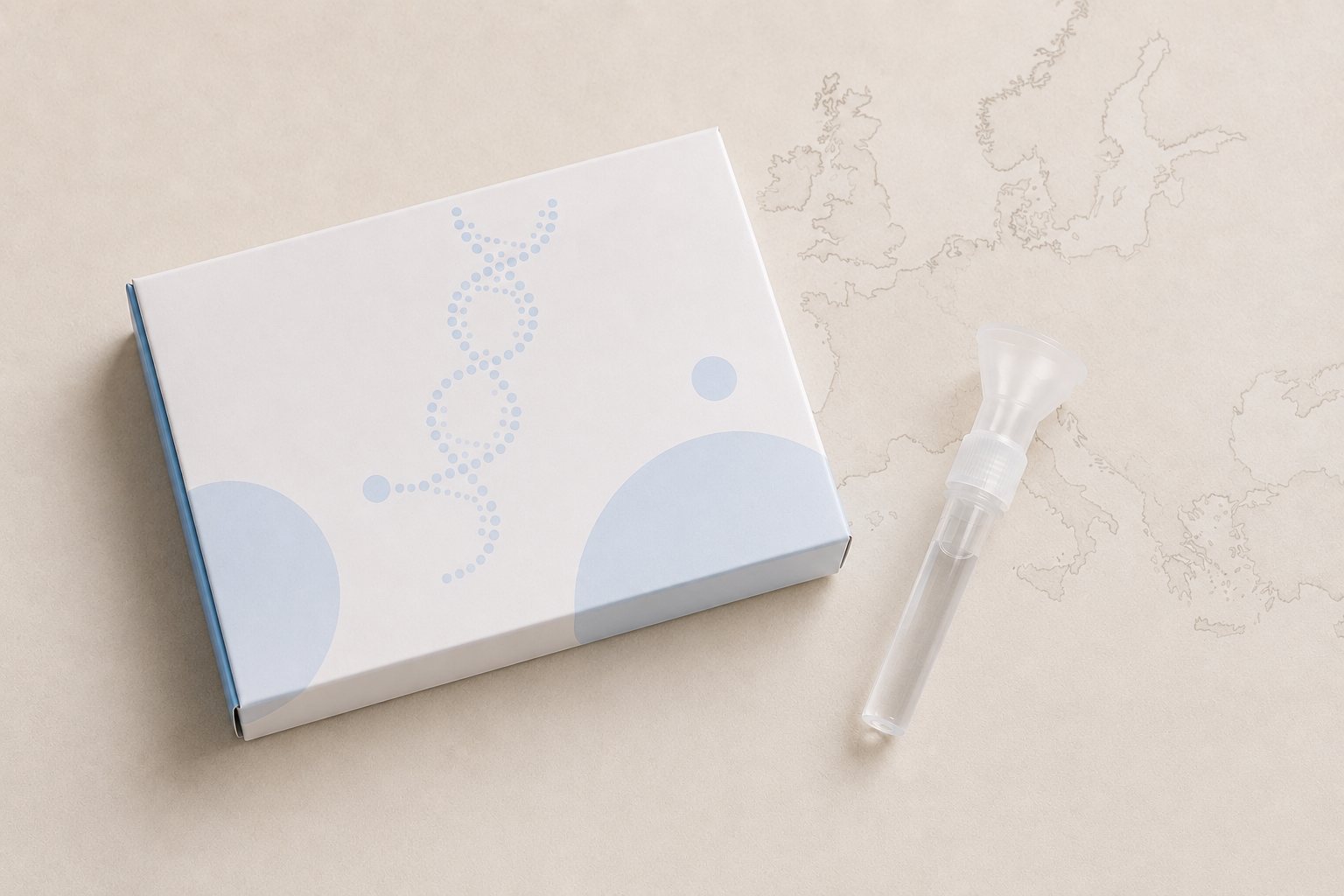
The kit itself is a cheek swab rather than a saliva sample, which some people find easier — no waiting to build up spit, no worrying about eating or drinking beforehand for as long. You register the kit online, swab both cheeks for a few seconds each, seal it up, and mail it back.
Results typically land in three to four weeks, though MyHeritage has been known to run faster than that outside of peak season. Once ready, everything shows up in one dashboard: your ethnicity estimate, DNA Matches, and if you’ve built one, your family tree overlaid with genetic connections.
Where MyHeritage DNA Genuinely Shines
European and Jewish ancestry detail
This is the headline strength, and it holds up. Because of where MyHeritage built its early user base, the database is unusually deep for European populations — particularly Ashkenazi Jewish ancestry, where other major competitors tend to lump broad regions together instead of getting specific.
If your family tree has roots in Poland, Italy, Germany, or similar regions, this is where MyHeritage tends to out-perform bigger-name competitors. The regional breakdown covers over 2,000 geographic regions worldwide, which is a meaningfully finer resolution than what some rivals offer.
The price makes it an easy first step
Compared to AncestryDNA or 23andMe, MyHeritage DNA is consistently one of the more affordable entry points into ancestry testing. It goes on sale often enough that patient shoppers rarely pay full price — waiting a few weeks for a promotion is usually worth it if you’re not in a rush.
Family tree tools are baked in, not bolted on
Unlike some competitors where the DNA test and the tree-building tool feel like separate products stitched together, MyHeritage treats them as one experience. Building your tree, matching DNA results to it, and following up on hints all happen in the same place. Smart Matches and Record Matches surface automatically as your tree grows, which speeds up research considerably compared to manually hunting through archives.
Deep Nostalgia adds an unexpected extra
Not strictly a DNA feature, but worth mentioning: MyHeritage’s photo animation tool, which brings old family photos to life, has become genuinely popular among genealogy enthusiasts. It’s a nice bonus layered on top of the core DNA and tree-building experience, even if it’s not the reason to buy the kit.
Where It Comes Up Short
The overall database is smaller than AncestryDNA’s
Fewer total users in the system means fewer total matches, especially outside its European stronghold. If you’re hoping to find dozens of new relatives regardless of background, AncestryDNA’s sheer size still wins that race.
Health add-ons feel like an afterthought
If you want ancestry and health in one kit, this isn’t really built for that combination. The health reporting exists as a separate purchase, but it’s not where MyHeritage puts its development effort, and it shows in the depth of what you get back.
Support can be slow
More than one review mentions delayed response times from customer support, particularly during sale periods when order volume spikes. Not a dealbreaker, but worth setting expectations around — don’t expect a same-day reply if you run into an issue with your kit.
What You’re Actually Paying For
MyHeritage runs frequent, fairly aggressive sales — first-year subscription pricing that drops well below the renewal rate is common. The DNA kit itself is usually one of the cheaper entry points in this space, though the full subscription (needed for deep record access and unlimited tree size) adds to the total cost if you plan to go beyond the basic ethnicity breakdown.
👉 Check current MyHeritage DNA pricing
So, Is It Worth It?
If your family story runs through Europe — especially Jewish, Italian, or Eastern European lines — yes, genuinely. The regional depth here is hard to match at this price point, and the tree-building tools make the whole experience feel more connected than some competitors.
If your background sits well outside that strength zone, or you’re chasing health data specifically, you’ll likely get more value from a different kit.
Frequently Asked Questions
Is MyHeritage DNA accurate? For European and Jewish ancestry, it’s among the more precise options available, thanks to the depth of its reference database in those regions. For ancestry outside that scope, expect broader, less specific estimates.
Can I upload raw DNA data from another company? Yes. MyHeritage accepts raw data uploads from most major competitors, including AncestryDNA and 23andMe, which is a budget-friendly way to access their matching database without buying a second kit.
How long does shipping and processing take? Kits typically ship within a few days of ordering, and results usually arrive three to four weeks after the lab receives your sample.
Final Take
MyHeritage DNA isn’t trying to be everything to everyone, and that’s actually its advantage. It knows its lane — European and Jewish ancestry research — and it executes well within it. Go in with the right expectations, and it’s one of the stronger values in this space.