Affiliate Disclosure: This post contains affiliate links. If you buy through one of them, we may earn a small commission — at no extra cost to you. We only recommend kits we’ve actually researched and would suggest to a friend.
The Redhead in a Family of Brunettes
Almost every family has a story like this. Two dark-haired parents, a couple of brown-haired kids, and then one child with bright red curls who looks like they wandered in from someone else’s family photo. Or a toddler with almost white-blond hair who, by age ten, has turned unmistakably brown. People joke about the milkman, but the real explanation is a lot more interesting — and it’s written in your DNA.
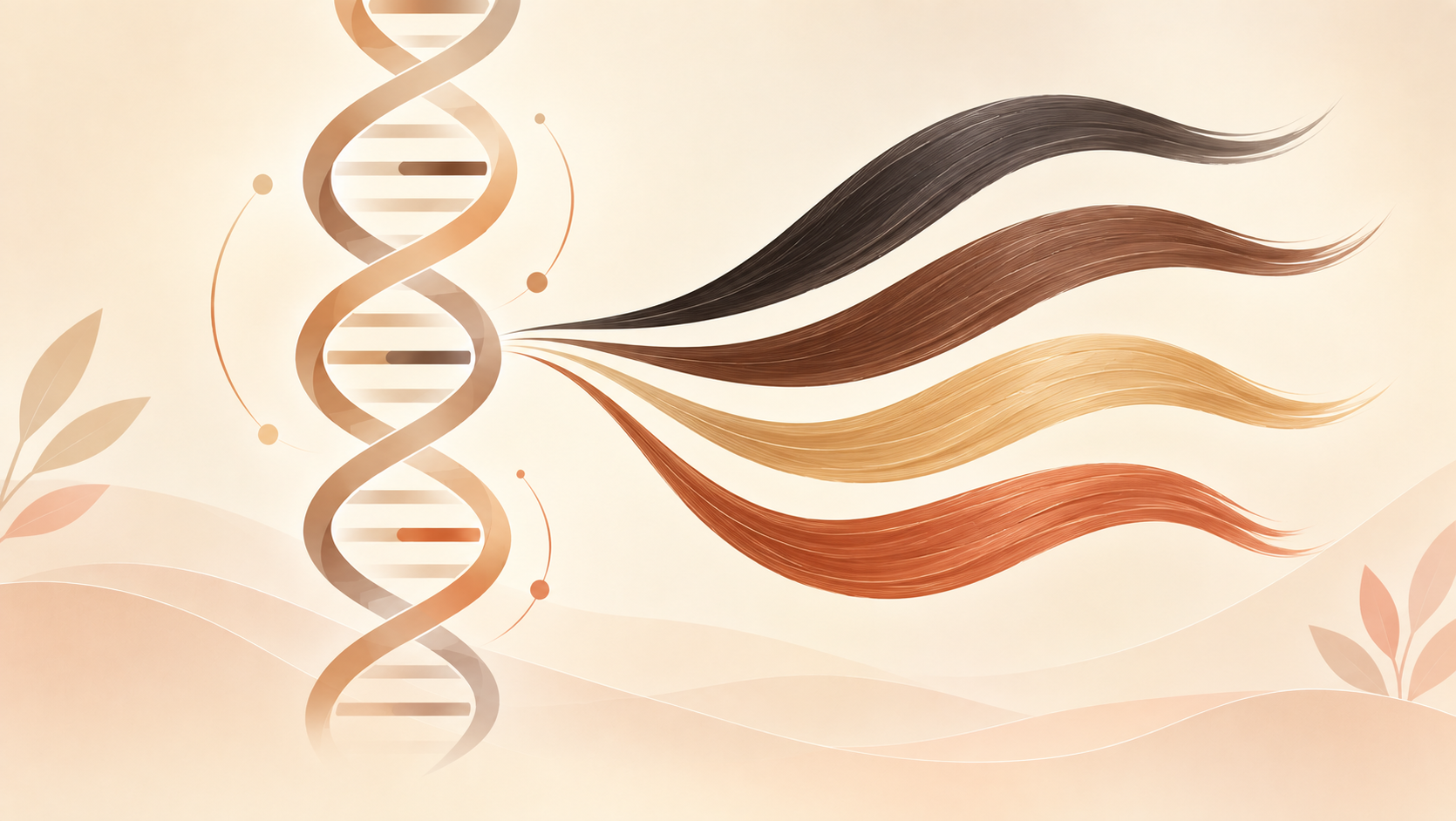
Hair color is one of the most obviously inherited traits there is. But it doesn’t follow the simple “brown beats blond” rule many of us learned in school. It’s shaped by more than a hundred genes, some of which can hide quietly for generations before showing up again.
This article explains where hair color comes from, which genes matter most, why it can change as you grow up, and why red hair in particular is linked to some surprising differences in how the body works.
Where Hair Color Comes From
Hair gets its color from melanin, a pigment made by cells called melanocytes inside each hair follicle. There are two main types:
Eumelanin is a dark pigment that comes in brown and black shades. More eumelanin means darker hair; a small amount gives lighter browns and blondes.
Pheomelanin is a reddish-yellow pigment. It’s present in most people’s hair in small amounts, but when it dominates, hair looks red, auburn, or strawberry blond.
Every natural hair color is a mix of these two pigments. Black hair has lots of eumelanin. Brown has a moderate amount. Blond has very little of either. Red has plenty of pheomelanin and relatively little eumelanin. The genes you inherit decide how much of each your follicles make.
Why It’s Not as Simple as Dominant and Recessive
Many people learned hair color as a single-gene trait — dark hair is dominant, light hair is recessive. That model captures a little of the truth, but it falls apart quickly in real families.
A large study published in 2018, which analyzed genetic data from roughly 300,000 people, identified more than 120 genes linked to hair color. Each contributes a small amount, and together they produce the huge range of shades we see — from jet black to platinum blond and everything in between.
That’s why two brown-haired parents can have a blond child, and why siblings can end up with noticeably different shades. Each child inherits a different shuffle of variants from each parent. It works on a similar principle to the inheritance patterns we explained in our article on blood type genetics, where a parent can carry a hidden version of a gene that only shows up when a child inherits it from both sides — except with hair color, dozens of genes are being shuffled at once.
The Genes That Matter Most
Even though many genes are involved, a few have an especially large effect.
MC1R — the “redhead gene.” MC1R works like a switch that tells melanocytes whether to make dark eumelanin or red pheomelanin. When MC1R works normally, it pushes cells toward eumelanin. Certain common variants weaken that switch, so cells make more pheomelanin instead. Most natural redheads carry two weakened copies — one from each parent. People with just one copy usually don’t have red hair but may have freckles, fair skin, or a reddish tint in their beard.
HERC2 and OCA2. These neighboring genes are best known for their role in eye color, especially blue versus brown eyes. They also influence hair and skin color, which is one reason light hair and light eyes often go together.
KITLG. A variant that affects how this gene is switched on in hair follicles has been linked to blond hair in people of Northern European descent. It’s a good example of how small changes in when and where a gene is active can shift hair color.
TYRP1. In the Solomon Islands, many people have naturally blond hair with dark skin. Researchers found that this blondness comes from a variant in TYRP1 that’s almost absent in Europe — meaning blond hair evolved independently in different parts of the world.
Many smaller contributors. Dozens of other genes each nudge hair a little lighter or darker, together creating the subtle differences between, say, light brown and dark blond.
How Hair Color Connects to Hair Texture
Hair color and hair texture are often inherited together in families, but they’re controlled by different genes. Color depends on which pigments your melanocytes make; texture depends on the shape of the follicle itself. We covered the texture side in our article on why some people have straight, wavy, or curly hair.
Because the two are controlled separately, any combination is possible — straight red hair, curly blond hair, wavy black hair — depending on which variants a person happens to inherit.
Why Blond Children Often Turn Brown
One of the most common surprises for parents is watching a blond toddler’s hair gradually darken. This is completely normal. Many children are born with light hair that darkens through childhood and into the teenage years, as genes involved in eumelanin production become more active.
Hormonal changes, especially around puberty, also play a role. That’s why some people who were blond as children end up with light or medium brown hair as adults. The genes they were born with haven’t changed — but how strongly those genes are expressed has.
Red Hair Is About More Than Color
Because MC1R is active in more places than just hair follicles, people with natural red hair tend to share a few other traits too.
Sun sensitivity. Pheomelanin offers much less protection against UV light than eumelanin, so redheads usually have fair skin that burns easily and tans poorly. MC1R variants are also linked to a higher risk of skin cancer, including melanoma, which makes daily sun protection especially important.
Pain and anesthesia. Some research suggests that people with natural red hair may respond differently to certain types of pain and may need somewhat more of some anesthetics. Findings vary between studies, but it’s an intriguing example of how a pigment gene can influence other systems. We looked at the broader picture of why people feel pain so differently in our article on why the same injury hurts some people more than others.
Freckles. MC1R variants are strongly linked to freckling, even in people who don’t have red hair themselves.
If you have natural red hair and are scheduled for surgery, it’s reasonable to mention it to your anesthesiologist, though they’ll guide dosing based on your individual response.
How Rare Is Red Hair?
Natural red hair is the rarest hair color, found in roughly 1% to 2% of people worldwide. It’s much more common in some places — particularly Scotland and Ireland, where estimates are often around 6% to 10% of people. Because the red-hair variants are recessive, many more people carry one copy without having red hair. That’s how red hair can seem to appear “out of nowhere” in a family where no one has had it for generations.
What Changes Hair Color Besides Genes?
Genes set your natural hair color, but other factors can change how it looks over time:
Age. Hair often darkens through childhood and then gradually loses pigment later in life as it turns gray.
Sun exposure. Sunlight can lighten hair, especially lighter shades, by breaking down melanin.
Hormones. Puberty, pregnancy, and other hormonal changes can shift hair color slightly.
Nutrition and health. Severe nutritional deficiencies and some medical conditions can affect pigment, though this is uncommon in people with a balanced diet.
Chemicals and swimming pools. Hair dye, bleach, and even chlorinated pool water can change hair color — sometimes with surprising greenish tints in very light hair.
Where a DNA Test Fits Into This
Some consumer DNA tests include trait reports that predict hair color or whether you carry red-hair variants. These can be fun, and fairly accurate for clear-cut traits like red hair, but they’re less precise for in-between shades because so many genes are involved.
If your main interest is health rather than appearance, a wellness-focused test like DNApower covers areas like diet, vitamin absorption, and exercise response. It doesn’t focus on hair color, but it can tell you more about how your body works in ways that affect everyday health.
Frequently Asked Questions
Can two brown-haired parents have a blond or red-haired child? Yes. Both parents can carry hidden variants for lighter hair or red hair without showing them. If a child inherits those variants from both sides, they can end up with hair that’s much lighter or redder than either parent.
Why did my child’s blond hair turn brown? It’s very common for hair to darken during childhood and adolescence as genes involved in dark pigment become more active, especially around puberty.
Is red hair recessive? Mostly, yes. Most natural redheads carry two copies of red-hair variants in the MC1R gene, one from each parent. People with one copy usually don’t have red hair but may have freckles or a reddish beard.
Is hair color linked to eye color? Partly. Some genes, like HERC2 and OCA2, influence both hair and eye color, which is why light hair and light eyes often appear together. But they’re inherited somewhat independently, so many combinations are possible.
Can a DNA test predict my hair color? It can give a reasonable prediction, especially for red hair, but it’s less precise for in-between shades because so many genes are involved.
The Bottom Line
Hair color is one of the clearest examples of genetics at work, but it’s far more complex than a single dominant gene. More than a hundred genes help decide how much dark and red pigment your hair contains, which is why siblings can look so different and why red or blond hair can reappear after skipping generations. And in the case of red hair, the same gene behind the color also shapes how your skin handles the sun and, possibly, how you experience pain.
If you’d like to explore how your genes shape other areas of your health, DNApower’s wellness panel is a reasonable place to start.