Affiliate Disclosure: This post contains affiliate links. If you buy through one of them, we may earn a small commission — at no extra cost to you. We only recommend kits we’ve actually researched and would suggest to a friend.
The Brows You Inherited
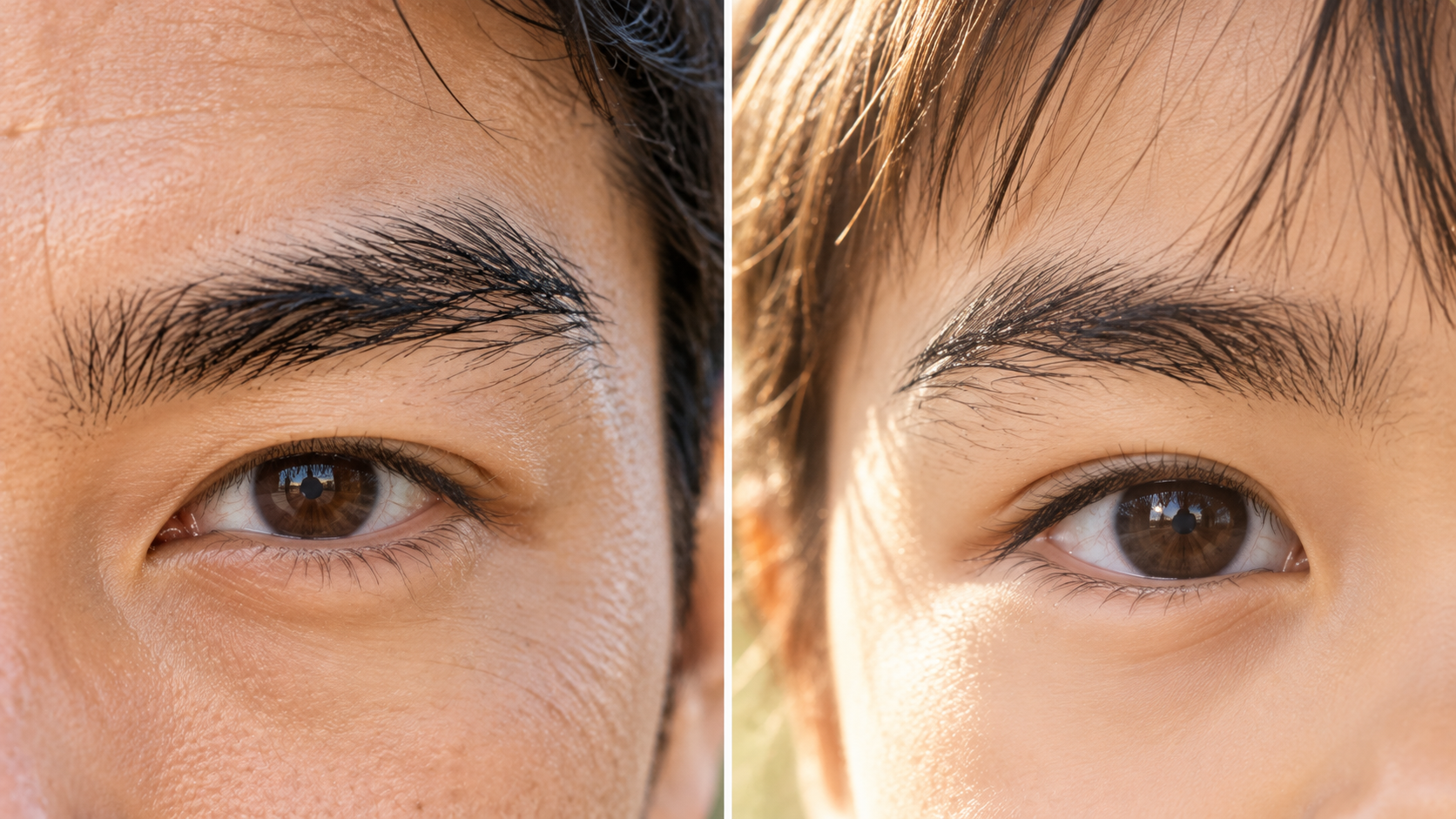
Look at old family photos and you’ll often spot it: the same bold, straight brows on a grandfather, a mother, and a teenage son. Or the same fine, barely-there arches passed down through the women of a family. Eyebrows are one of the most distinctive features on a face, and they’re surprisingly consistent within families.
That’s not a coincidence. Eyebrow thickness, shape, and even whether they meet in the middle are all influenced by genes. Researchers have even identified specific genes linked to thick brows and unibrows. But genes aren’t the whole story — age, hormones, health, and years of plucking can all change how your brows look.
This article explains what we know about the genetics of eyebrows, why brows change over time, and what to do if yours are thinning.
Why We Have Eyebrows at All
Eyebrows aren’t just decoration. They have a few practical jobs:
Keeping moisture out of your eyes. The shape and direction of eyebrow hair helps channel sweat and rain away from your eyes.
Communication. Eyebrows are one of the most expressive parts of the face. A raised brow, a frown, or a furrow can say more than words.
Recognition. Research suggests eyebrows play a surprisingly big role in how we recognize faces. In one study, people found it harder to recognize famous faces with the eyebrows removed than with the eyes removed.
So when people care about their brows, they’re paying attention to something that genuinely shapes how others see them.
How Strongly Do Eyebrows Run in Families?
Very noticeably. Eyebrow thickness and shape are visible traits that tend to look similar between parents and children, and between siblings. Like most physical features, they’re shaped by many genes working together, which is why brows can look alike in a family without being identical.
The big breakthrough in understanding eyebrow genetics came from a 2016 study of more than 6,000 people across Latin America. Because the participants had a wide mix of European, Native American, and African ancestry, they showed a huge range of hair traits — making it easier for researchers to spot which genes were involved. The same study also identified IRF4, the first gene linked to gray hair.
The Genes Linked to Eyebrows
FOXL2 — eyebrow thickness. The 2016 study linked this gene to how thick eyebrows are. FOXL2 is involved in the development of tissues around the eyes, which may explain its role in eyebrow growth.
PAX3 — the unibrow gene. A unibrow, also called a monobrow (or synophrys in medical terms), happens when eyebrows grow together over the bridge of the nose. The 2016 study linked this trait to the PAX3 gene, which helps guide how facial features develop before birth. PAX3 is also involved in the development of pigment cells and certain facial structures.
EDAR — thicker hair in general. This gene influences hair thickness and is linked to beard thickness and thicker scalp hair, particularly in people of East Asian and Native American descent. It’s a good reminder that many hair traits share overlapping genetic roots.
Many smaller contributors. Beyond these, many other genes each add a small effect, shaping the density, color, and growth pattern of your brows.
Eyebrows vs. Other Hair
Eyebrows are part of the same family of hair traits as your scalp hair, but they behave differently in a few ways.
Unlike beard or body hair, eyebrows are present from early childhood and don’t depend heavily on the hormonal changes of puberty. That means you’ll often see a child’s brow shape clearly before puberty, and it tends to stay recognizable throughout life.
Eyebrow hairs also have a much shorter growth cycle than scalp hair. They typically grow for only a few months before shedding, which is why they stay short. Scalp hair, by contrast, can grow for years.
The shape of the follicle, which determines whether hair is straight or curly, also affects how brows lie — something we explored in our article on why some people have straight, wavy, or curly hair. Curlier brow hairs tend to look fuller but can be harder to keep in shape.
Why Eyebrows Thin With Age
Many people notice their eyebrows getting sparser as they get older, especially toward the outer ends. Hair follicles become less active with age, growth cycles shorten, and some follicles stop producing hair altogether. Brows can also turn gray or white, which can make them look thinner even if the number of hairs hasn’t changed much.
Hormonal changes matter too. Some women notice changes in their brows during pregnancy or after menopause.
Eyebrow thinning isn’t usually linked to the same process as pattern hair loss on the scalp, which is driven mostly by sensitivity to the hormone DHT. We covered that in our article on whether baldness really comes from your mother’s side. Someone can have thinning scalp hair and full brows, or the reverse.
When Thinning Brows Might Mean Something Else
Most eyebrow thinning is just part of aging or the result of past grooming habits. But sometimes it can be a clue to an underlying health issue.
Thyroid problems. Loss of hair from the outer third of the eyebrows is a classic sign associated with an underactive thyroid (hypothyroidism). It often comes with other symptoms, like tiredness, feeling cold, weight gain, dry skin, or constipation. We discussed how thyroid function affects the body in our article on whether a slow metabolism is real. A simple blood test can check thyroid function.
Alopecia areata. This autoimmune condition causes patchy hair loss and can affect the eyebrows as well as the scalp.
Frontal fibrosing alopecia. This condition causes gradual hair loss along the front hairline and often the eyebrows, mostly in older women.
Nutritional deficiencies. Low iron, low protein, or other deficiencies can affect hair growth, including eyebrows.
Skin conditions. Eczema or seborrheic dermatitis around the brows can lead to irritation, rubbing, and hair loss.
If your brows are thinning quickly, unevenly, or along with other symptoms, it’s worth seeing a doctor.
The Plucking Problem
If you grew up during an era of super-thin brows, you may have noticed that some hairs never grew back. Repeated plucking or waxing over many years can damage hair follicles, and some may eventually stop producing hair altogether. This is one of the most common reasons people end up with permanently thinner brows — and it has nothing to do with genetics.
If you’re trying to grow your brows back, the best first step is to stop plucking and give them a few months. Many follicles will recover, though some may not.
Can You Change Your Eyebrows?
You can’t change your genes, but there are ways to make your brows look fuller:
Patience. Eyebrow hair grows slowly, and it can take three to four months to see the full effect of letting brows grow out.
Brow serums. Some products claim to boost growth, though evidence varies. Certain prescription treatments used for eyelashes are sometimes used on brows by doctors, but they can have side effects and should be used under medical guidance.
Minoxidil. Some dermatologists recommend minoxidil, a hair growth treatment, for eyebrows, though this is an off-label use and should be discussed with a doctor first.
Brow makeup. Pencils, powders, gels, and tints can fill in sparse areas and define shape.
Microblading and brow tattooing. These semi-permanent techniques create the look of fuller brows. Choose a licensed, experienced practitioner, since results can be hard to reverse.
Eyebrow transplants. For permanent thinning, hair can be transplanted from the scalp to the brows. The transplanted hair may grow longer than natural brow hair and need regular trimming.
Myths About Eyebrows
Shaving your eyebrows makes them grow back thicker. Shaving doesn’t change the follicle, so it can’t make hair thicker. Regrowth may feel coarser at first because of the blunt cut.
Unibrows are rare. They’re actually common, and how much brows meet in the middle varies a lot between people and families.
Thick brows mean high testosterone. Eyebrows depend much less on male hormones than beard or body hair, and their thickness is largely genetic.
Once eyebrows thin, they never come back. Brows thinned by plucking, stress, or a treatable health condition often recover, at least partly.
Where a DNA Test Fits Into This
There’s no genetic test that can tell you exactly how thick your eyebrows will be — your family photos are probably a better guide. And if your brows are thinning, a doctor and some simple blood tests will tell you far more than a DNA test.
If you’re curious about how your genes shape your health more broadly, a wellness-focused test like DNApower covers traits like diet, vitamin absorption, and exercise response. It won’t predict your brow shape, but it can help you understand how your body handles nutrients that support healthy hair and skin.
Frequently Asked Questions
Are thick eyebrows genetic? Largely, yes. Researchers have linked genes like FOXL2 to eyebrow thickness, and brow shape and density tend to run in families.
Is a unibrow genetic? Yes. A 2016 study linked unibrows to a gene called PAX3, which helps guide facial development.
Why are my eyebrows thinning? Common causes include aging, years of plucking, hormonal changes, and sometimes health issues like an underactive thyroid. If thinning is sudden or comes with other symptoms, see a doctor.
Can over-plucked eyebrows grow back? Often, at least partly. Stopping plucking for several months gives follicles a chance to recover, though some may be permanently damaged.
Do eyebrows change with age? Yes. Brows often become sparser, especially at the outer edges, and can turn gray with age.
The Bottom Line
Your eyebrows are largely written in your genes. Researchers have linked specific genes to thick brows and unibrows, which is why brow shape so often runs in families. But age, hormones, health, and years of grooming habits can all change how they look over time. If your brows are thinning suddenly or along with other symptoms, it’s worth checking with a doctor — and if they’re simply thinner than you’d like, there are plenty of ways to help them look fuller.
If you’d like to explore how your genes shape other areas of your health, DNApower’s wellness panel is a reasonable place to start.