タグ: ancestry DNA

  • Living DNA Review 2026: Is the Extra Detail Worth the Wait?

    Living DNA Review 2026: Is the Extra Detail Worth the Wait?

    Affiliate Disclosure: This post contains affiliate links. If you buy through one of them, we may earn a small commission — at no extra cost to you. We only recommend kits we’ve actually researched and would suggest to a friend.

    When “20% Irish” Isn’t Specific Enough

    Most DNA kits will tell you that you’re some percentage Irish, or British, or Scandinavian. Fine, but vague. If you’ve ever wanted to know which part of Ireland, or which county your family likely came from, that’s the itch Living DNA is trying to scratch.

    I went in curious whether the extra regional detail actually holds up, or whether it’s just a marketing angle. Here’s what I found.

    Who Shouldn’t Bother

    A few honest exceptions up front:

    If your ancestry sits mostly outside the UK, Ireland, or Europe, the deep regional detail Living DNA is known for won’t apply to you the same way — you’ll get a more general picture, similar to what a bigger competitor would offer.

    If your top priority is finding as many living relatives as possible, the smaller database here means fewer total matches compared to AncestryDNA or 23andMe.

    And if you want results fast, the six-to-eight week turnaround (sometimes longer) is on the slower end of the industry. Patience required.

    Otherwise, keep reading.

    How the Kit Works

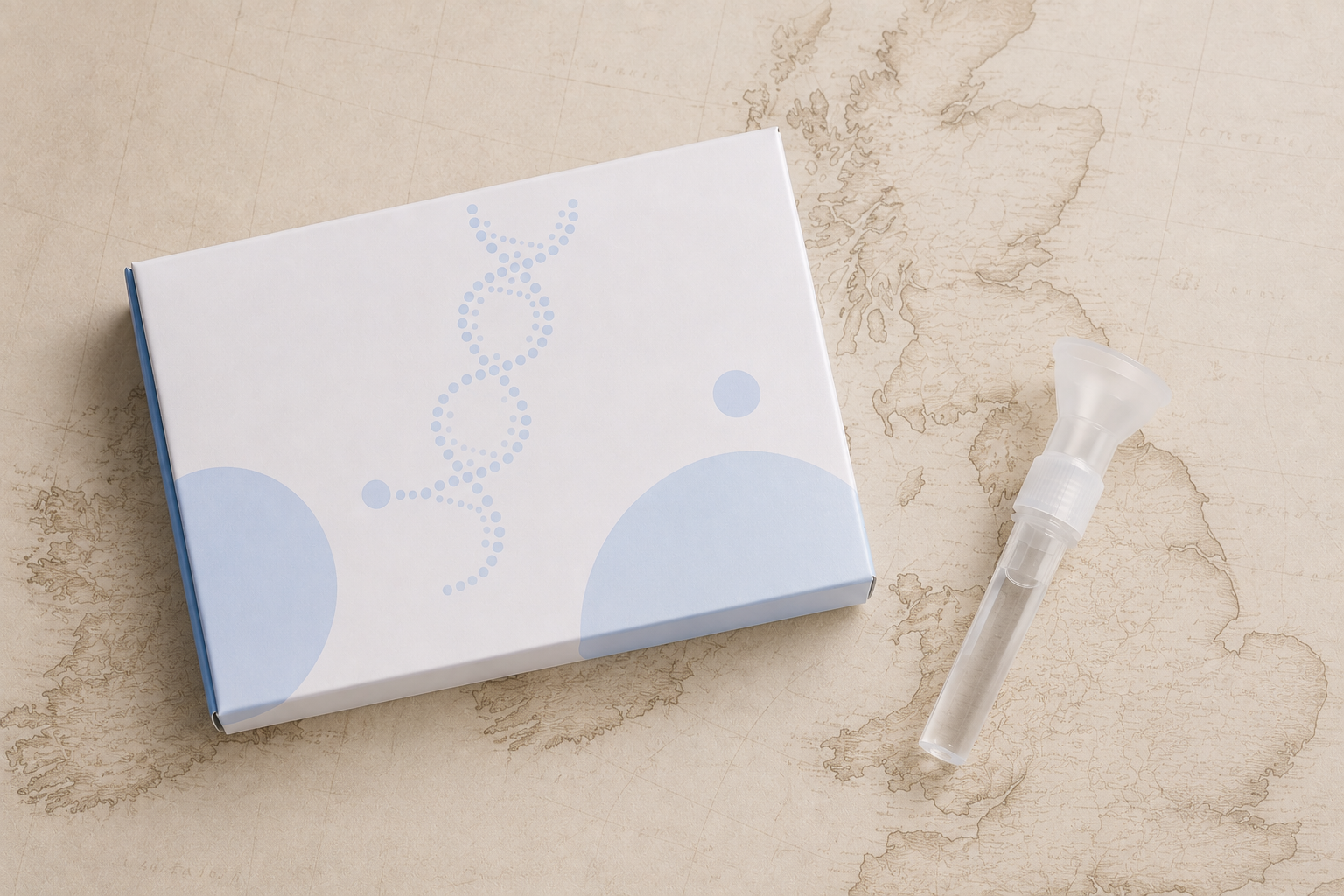
    Living DNA uses a cheek swab rather than a saliva sample. You activate the kit online using the code included in the box, swab each cheek for about a minute, then seal and mail the sample back.

    This is also where the brand’s slower pace shows up. The stated turnaround is six to eight weeks, but it’s worth mentally budgeting for closer to ten if you’re testing during a busy period. Once results are ready, you’ll get an email, and everything — ancestry breakdown, matches, and any add-on reports you purchased — lives in your online account.

    What Living DNA Does Better Than Almost Anyone

    Regional detail within the British Isles is genuinely impressive

    This is the whole reason to choose Living DNA over a bigger name. Instead of a single “British Isles” blob, the ethnicity breakdown can point to specific sub-regions — over 21 distinct regions within the British Isles alone, a level of granularity most competitors simply don’t offer.

    If your family history runs through England, Scotland, Ireland, or Wales, this specificity can turn a vague family story into something you can actually trace on a map, right down to which historical county your ancestors likely lived in.

    It tests more than just autosomal DNA

    Living DNA looks at autosomal, Y-DNA, and mitochondrial DNA together, giving you insight into both your paternal and maternal lines in a single kit. Some competitors charge extra or require separate tests to get this same breadth — here, it’s included in the standard ancestry kit.

    Privacy practices are refreshingly clear

    Compared to some competitors where data-sharing settings are buried in menus, Living DNA is upfront about consent, and it’s straightforward to delete your data or opt out of research use later if you change your mind. The onboarding process walks you through each choice individually, rather than bundling everything into one blanket agreement.

    The wellbeing add-on is a nice extension

    For people who want to go beyond ancestry, Living DNA offers a separate wellbeing report covering nutrition, fitness, and lifestyle-related genetic traits. It’s not a replacement for a dedicated health-testing kit, but it’s a reasonable add-on if you’re already testing for ancestry and curious about the extra layer.

    Where It Falls Behind

    The database is smaller

    Fewer total users means fewer potential relative matches — meaningfully fewer than what AncestryDNA or 23andMe can offer, especially outside the UK and Europe. If new-relative discovery is your main goal, this is the biggest tradeoff to weigh.

    Turnaround time tests your patience

    Six to eight weeks is the stated window, and some users report it stretching closer to twelve. If you want quick answers — say, for a gift where the recipient is excited to see results soon — this isn’t the kit for that.

    Less useful outside its specialty

    If your ancestry isn’t rooted in the UK or Europe, you’re not getting the thing Living DNA does best. You’d likely get more detail, and probably faster results, elsewhere.

    What You’re Actually Paying For

    Living DNA sits in the mid-range price bracket — not the cheapest option, but not the most expensive either. The core ancestry kit covers the regional breakdown and the Y-DNA/mtDNA analysis; a separate wellbeing add-on covers nutrition and fitness-related traits if you want to go beyond ancestry.

    So, Is It Worth It?

    If you have known roots in the UK, Ireland, or elsewhere in Europe and you want more than a broad regional guess, yes — this is one of the few kits built specifically for that level of detail. The wait is real, but so is the payoff for the right audience.

    If your ancestry lies elsewhere, or you’re mainly hunting for new relatives, you’ll likely be better served by a kit with a bigger overall database.

    Frequently Asked Questions

    How long does Living DNA actually take? The company states six to eight weeks, though some customers report closer to ten to twelve weeks depending on season and lab volume.

    Does Living DNA test Y-DNA and mtDNA? Yes, and unlike many competitors, both are included in the standard ancestry kit rather than sold as separate add-ons.

    Is Living DNA good if I’m not from the UK or Europe? It’s usable, but you won’t get the same depth of regional detail that makes this brand stand out. A kit with a larger, more globally distributed database will likely serve you better in that case.

    Final Take

    Living DNA isn’t trying to out-database AncestryDNA, and it doesn’t need to. It picked a lane — deep regional detail for the British Isles and Europe — and it delivers on that promise better than most. Know what you’re signing up for, and the wait feels worth it.
  • MyHeritage DNA Review 2026: Worth It for European Roots?

    MyHeritage DNA Review 2026: Worth It for European Roots?

    Affiliate Disclosure: This post contains affiliate links. If you buy through one of them, we may earn a small commission — at no extra cost to you. We only recommend kits we’ve actually researched and would suggest to a friend.

    The Kit That Keeps Coming Up in European Family Searches

    If you’ve spent any time in genealogy forums, you’ve probably noticed something: whenever someone mentions European ancestry — especially Jewish, Italian, or Eastern European roots — MyHeritage DNA gets recommended over and over.

    That pattern caught my attention. Is it actually stronger in this area, or just popular because it started in Israel and built its early user base there? I dug in to find out.

    Who Should Look Elsewhere

    A few honest exceptions before we get into it:

    If your ancestry is mostly outside Europe, the Middle East, or the Jewish diaspora, you’ll likely get a thinner set of matches here than with a database more skewed toward your background.

    If health insights are the main draw, this isn’t the kit for you — health reporting is a separate add-on, and it’s not MyHeritage’s strong suit.

    And if you’re already deep into a specific research project — Y-DNA lineage tracing, for instance — a specialized tool like FamilyTreeDNA will likely serve you better.

    Otherwise, let’s get into what MyHeritage actually offers.

    How the Testing Process Works

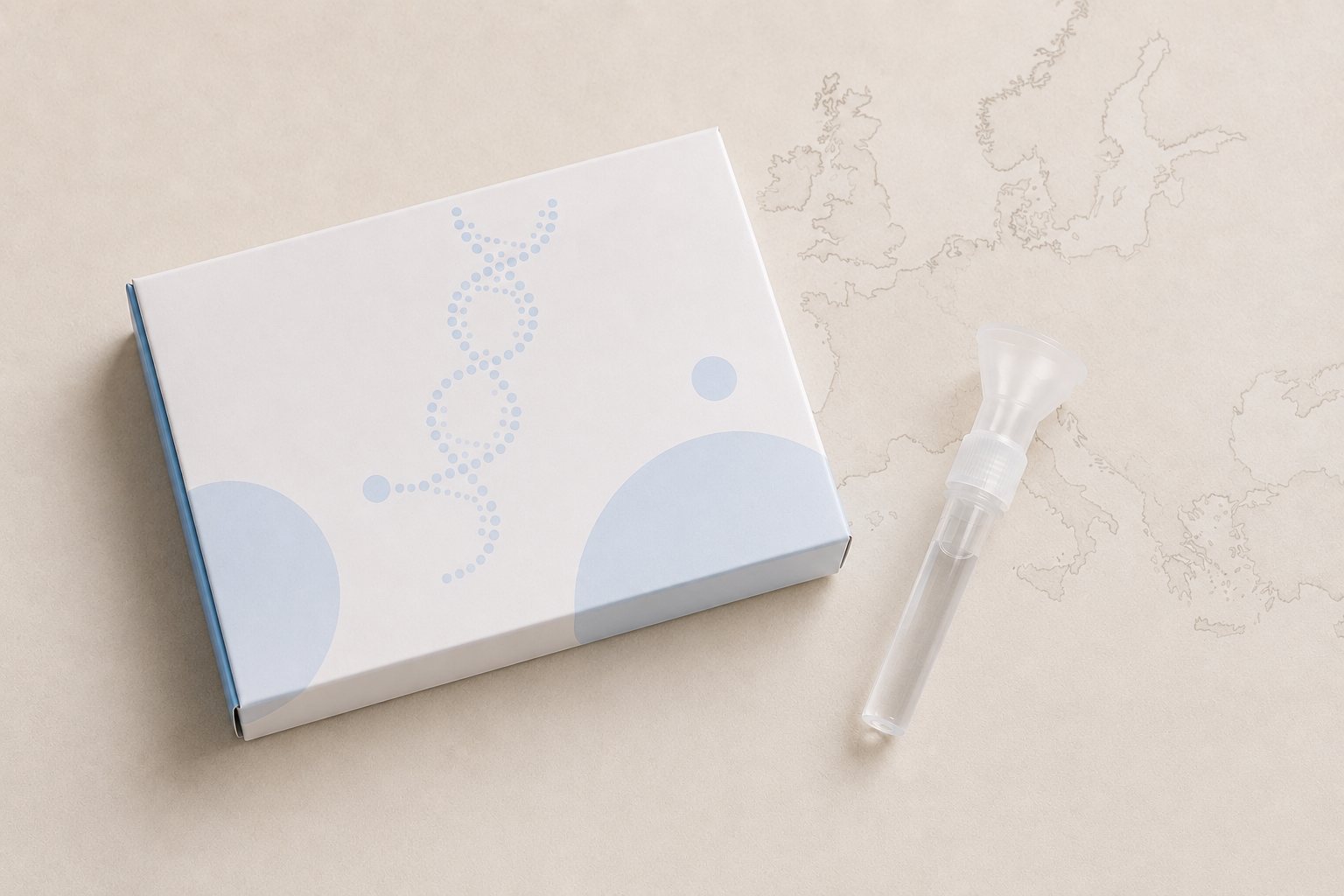
    The kit itself is a cheek swab rather than a saliva sample, which some people find easier — no waiting to build up spit, no worrying about eating or drinking beforehand for as long. You register the kit online, swab both cheeks for a few seconds each, seal it up, and mail it back.

    Results typically land in three to four weeks, though MyHeritage has been known to run faster than that outside of peak season. Once ready, everything shows up in one dashboard: your ethnicity estimate, DNA Matches, and if you’ve built one, your family tree overlaid with genetic connections.

    Where MyHeritage DNA Genuinely Shines

    European and Jewish ancestry detail

    This is the headline strength, and it holds up. Because of where MyHeritage built its early user base, the database is unusually deep for European populations — particularly Ashkenazi Jewish ancestry, where other major competitors tend to lump broad regions together instead of getting specific.

    If your family tree has roots in Poland, Italy, Germany, or similar regions, this is where MyHeritage tends to out-perform bigger-name competitors. The regional breakdown covers over 2,000 geographic regions worldwide, which is a meaningfully finer resolution than what some rivals offer.

    The price makes it an easy first step

    Compared to AncestryDNA or 23andMe, MyHeritage DNA is consistently one of the more affordable entry points into ancestry testing. It goes on sale often enough that patient shoppers rarely pay full price — waiting a few weeks for a promotion is usually worth it if you’re not in a rush.

    Family tree tools are baked in, not bolted on

    Unlike some competitors where the DNA test and the tree-building tool feel like separate products stitched together, MyHeritage treats them as one experience. Building your tree, matching DNA results to it, and following up on hints all happen in the same place. Smart Matches and Record Matches surface automatically as your tree grows, which speeds up research considerably compared to manually hunting through archives.

    Deep Nostalgia adds an unexpected extra

    Not strictly a DNA feature, but worth mentioning: MyHeritage’s photo animation tool, which brings old family photos to life, has become genuinely popular among genealogy enthusiasts. It’s a nice bonus layered on top of the core DNA and tree-building experience, even if it’s not the reason to buy the kit.

    Where It Comes Up Short

    The overall database is smaller than AncestryDNA’s

    Fewer total users in the system means fewer total matches, especially outside its European stronghold. If you’re hoping to find dozens of new relatives regardless of background, AncestryDNA’s sheer size still wins that race.

    Health add-ons feel like an afterthought

    If you want ancestry and health in one kit, this isn’t really built for that combination. The health reporting exists as a separate purchase, but it’s not where MyHeritage puts its development effort, and it shows in the depth of what you get back.

    Support can be slow

    More than one review mentions delayed response times from customer support, particularly during sale periods when order volume spikes. Not a dealbreaker, but worth setting expectations around — don’t expect a same-day reply if you run into an issue with your kit.

    What You’re Actually Paying For

    MyHeritage runs frequent, fairly aggressive sales — first-year subscription pricing that drops well below the renewal rate is common. The DNA kit itself is usually one of the cheaper entry points in this space, though the full subscription (needed for deep record access and unlimited tree size) adds to the total cost if you plan to go beyond the basic ethnicity breakdown.

    👉 Check current MyHeritage DNA pricing

    So, Is It Worth It?

    If your family story runs through Europe — especially Jewish, Italian, or Eastern European lines — yes, genuinely. The regional depth here is hard to match at this price point, and the tree-building tools make the whole experience feel more connected than some competitors.

    If your background sits well outside that strength zone, or you’re chasing health data specifically, you’ll likely get more value from a different kit.

    Frequently Asked Questions

    Is MyHeritage DNA accurate? For European and Jewish ancestry, it’s among the more precise options available, thanks to the depth of its reference database in those regions. For ancestry outside that scope, expect broader, less specific estimates.

    Can I upload raw DNA data from another company? Yes. MyHeritage accepts raw data uploads from most major competitors, including AncestryDNA and 23andMe, which is a budget-friendly way to access their matching database without buying a second kit.

    How long does shipping and processing take? Kits typically ship within a few days of ordering, and results usually arrive three to four weeks after the lab receives your sample.

    Final Take

    MyHeritage DNA isn’t trying to be everything to everyone, and that’s actually its advantage. It knows its lane — European and Jewish ancestry research — and it executes well within it. Go in with the right expectations, and it’s one of the stronger values in this space.

    👉 See current MyHeritage DNA offers

  • AncestryDNA Review 2026: Is It Actually Worth It?

    AncestryDNA Review 2026: Is It Actually Worth It?

    Affiliate Disclosure: This post contains affiliate links. If you buy through one of them, we may earn a small commission — at no extra cost to you. We only recommend kits we’ve actually researched and would suggest to a friend.

    Everyone Recommends It. But Should You Actually Buy It?

    Type “DNA test” into any search bar and AncestryDNA shows up first, almost every time.

    That kind of dominance makes you suspicious, doesn’t it? Is it actually the best option, or just the loudest one? I wanted to find out — not through marketing copy, but by looking at what it actually does well, and where it quietly falls short.

    Here’s the honest version.

    Who Should Skip This One

    Before the good stuff, a few honest exceptions:

    If you’re mainly chasing health insights — disease risk, carrier status, that kind of thing — AncestryDNA isn’t built for that. It’s a genealogy tool first, and the health side is thin.

    If your ancestry is largely outside the US, UK, Canada, or Australia, the database still leans heavily Western, so your matches may feel sparse.

    And if you already know your family tree cold — you’ve done the archives, you’ve talked to relatives, you have the paperwork — this kit might just confirm what you already know.

    Otherwise, keep reading.

    How the Kit Actually Works

    Ordering is simple enough: the kit arrives in a few days, and the whole collection process takes about five minutes. You spit into a tube (no swabbing involved, which some people prefer), seal it, and mail it back in the prepaid packaging.

    From there, it’s mostly a waiting game. Processing typically takes three to four weeks, though it can stretch longer during peak seasons like January, when a wave of holiday-gifted kits all land at the lab around the same time. You’ll get an email the moment results are ready, and everything — ethnicity estimate, DNA matches, traits — shows up in one dashboard.

    What AncestryDNA Actually Gets Right

    The database is genuinely massive

    This is the part that matters most. AncestryDNA has the largest consumer DNA database out there, and size isn’t just a bragging number — it directly changes what you get back.

    More people in the database means more potential matches. A second cousin you never knew existed. A great-grandparent’s sibling’s descendants. The kind of connections that smaller competitors simply can’t surface, because the people aren’t in their system. If you’re hoping DNA testing leads to actual new relationships — not just percentages on a screen — this is the single biggest factor working in your favor.

    It plugs straight into historical records

    This is where AncestryDNA pulls ahead of almost everyone. Your DNA results connect directly to census records, immigration documents, military records — the paper trail that turns “20% Scottish” into an actual family story with names and dates attached.

    If you’ve ever tried building a family tree from scratch, you know how much time this saves. Instead of manually searching archive by archive, the platform surfaces “hints” — a birth certificate that might belong to your great-great-grandfather, a ship manifest that matches a family story you’d heard secondhand. Some of those hints turn out to be dead ends, but enough of them land to make the research feel less like guesswork.

    The interface doesn’t require a manual

    You don’t need to be tech-savvy to use this. The ethnicity breakdown, the match list, the tree-building tool — it’s all laid out in a way that makes sense on the first try. That matters more than it sounds, especially if this is a gift for a parent or grandparent who isn’t chasing the latest app trends.

    Traits reports add a lighter layer

    Beyond ancestry, AncestryDNA includes a set of trait reports — things like whether you’re likely to have a sweet tooth or how your body processes certain foods. These aren’t medical-grade and shouldn’t be treated as health advice, but they’re a fun, low-stakes addition that rounds out the experience without pretending to be something it’s not.

    Where It Falls Short

    Health insights are basically an afterthought

    If part of you wants both ancestry and health data in one kit, AncestryDNA won’t fully scratch that itch. It’s not designed as a health tool, and it shows — the trait reports are closer to novelty than clinical insight.

    The subscription creep is real

    The DNA kit itself is a one-time purchase, but full access to those historical records — the thing that makes AncestryDNA genuinely powerful — requires an ongoing subscription. It’s worth knowing that going in, so it doesn’t feel like a bait-and-switch later. Budget for the subscription if you actually want to use the records, not just look at percentages.

    Coverage is still Western-leaning

    If your family history runs through Asia, Africa, or parts of Latin America, don’t expect the same depth of matches or regional detail that US and European users get. The database reflects who’s been testing, and that skews heavily toward a handful of countries — the US, UK, Canada, and Australia in particular.

    What You’re Actually Paying For

    AncestryDNA runs frequent sales, so the price you see today probably won’t be the price next month. Roughly speaking:

    • The base DNA kit sits in the mid-range compared to competitors
    • Historical records access is a separate subscription, priced in tiers depending on how deep you want to go — from basic US records up to an all-access global tier
    • Bundled packages (kit + subscription) tend to offer the best overall value if you’re planning to actually dig into your tree, rather than just glance at an ethnicity pie chart

    👉 Check current AncestryDNA pricing

    So, Is It Worth It?

    If genealogy is genuinely your goal — not just a curiosity, but something you want to actually dig into — yes. The database size alone makes it hard to beat, and the records integration turns raw DNA percentages into an actual story.

    If you’re chasing health data, or your family roots sit well outside the US/UK/Canada/Australia axis, you’ll probably walk away a little underwhelmed. In that case, it’s worth looking at a kit built specifically for what you actually want to know.

    Final Take

    I went in expecting AncestryDNA’s popularity to be mostly hype. It isn’t. The database really is the differentiator, and once you connect your results to historical records, it stops feeling like a novelty and starts feeling like a research tool.

    Just go in knowing what it’s not — a health test, or a deep dive into non-Western ancestry — and it’s much easier to feel like you got your money’s worth.

    👉 See current AncestryDNA offers