Affiliate Disclosure: This post contains affiliate links. If you buy through one of them, we may earn a small commission — at no extra cost to you. We only recommend kits we’ve actually researched and would suggest to a friend.
Same Beach, Same Sunscreen, Wildly Different Results
You’ve probably seen this play out on a group vacation: everyone applies the same sunscreen at the same time, and by the end of the day one person has a golden tan while another is bright red and wincing at the shower water. It’s tempting to blame sunscreen application or how much time someone spent in the shade, but a real, well-documented genetic component determines how your skin actually responds to UV exposure — sometimes overriding lifestyle factors almost entirely.
The Gene Behind Sun Sensitivity, Freckles, and Hair Color
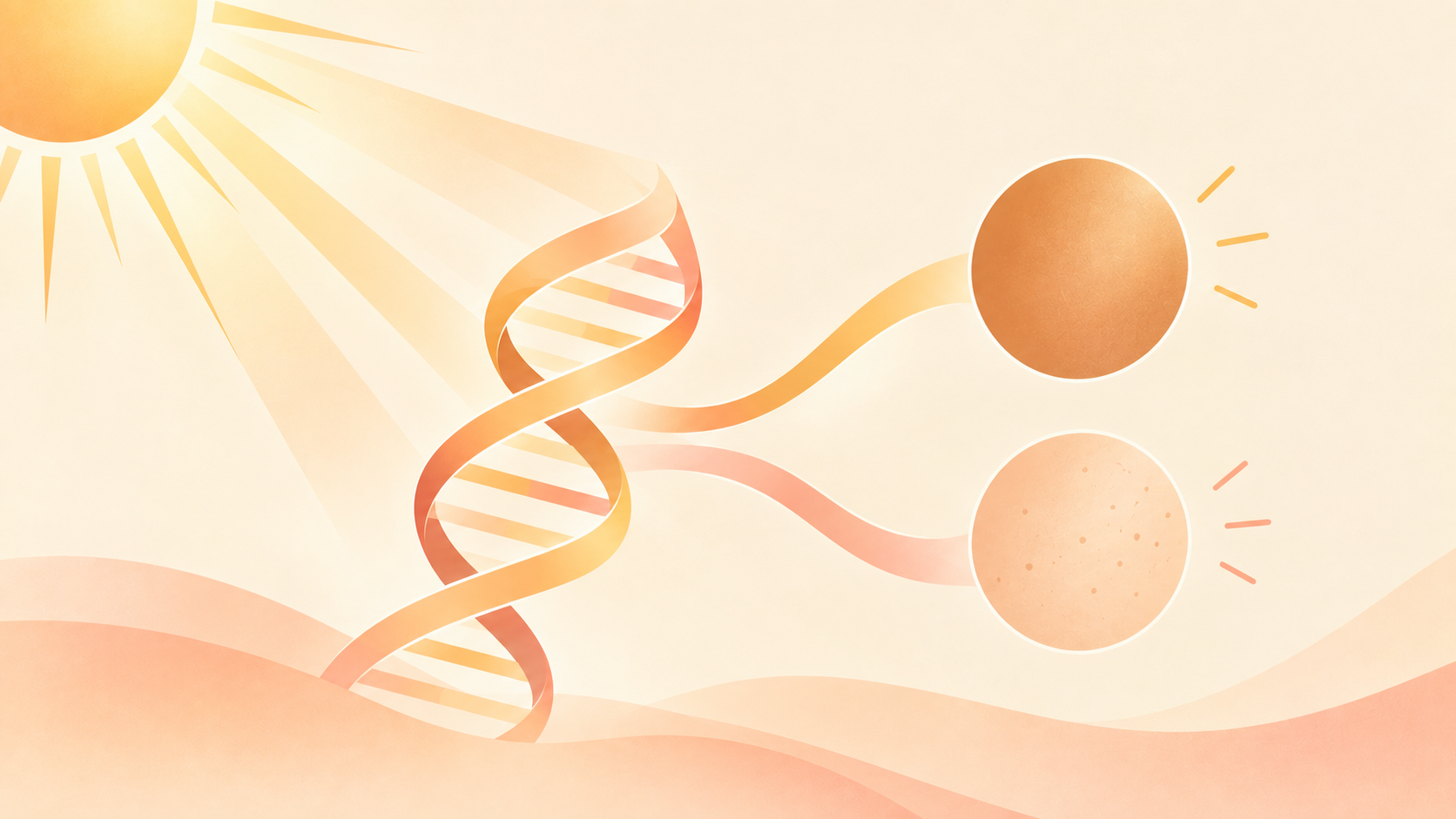
MC1R — the “redhead gene.” This is the single most influential gene in this area, and it does far more than just determine hair color. MC1R controls the type and ratio of melanin your skin produces — specifically, the balance between eumelanin (a darker, more UV-protective pigment) and pheomelanin (a lighter, red-toned pigment that offers considerably less protection against UV damage).
People with variants that favor pheomelanin production tend to have red or strawberry-blonde hair, fair skin, and a strong tendency toward freckling — and critically, their skin has a much harder time building the kind of protective pigment that limits UV damage. This is why the classic “burns, doesn’t tan” pattern isn’t a personal failing or a sunscreen problem; it’s a fundamentally different pigment-production system at the genetic level.
People with variants favoring eumelanin production tend to tan more readily and burn less easily, since their skin can generate more of the pigment type that actually blocks UV radiation from reaching deeper skin layers.
Why Freckles Specifically Show Up
Freckles are essentially small, concentrated clusters of pigment-producing cells responding unevenly to UV exposure, and MC1R variants strongly influence how prone someone is to developing them, particularly with sun exposure in childhood. This is why freckling often runs so visibly in families alongside red or fair hair — it’s largely the same underlying genetic variant producing multiple visible traits at once.
This Connects to More Than Just Tanning
Sun sensitivity genetics isn’t purely cosmetic. MC1R variants associated with fair skin, red hair, and reduced tanning ability are also associated with a measurably higher lifetime risk of skin cancer, including melanoma, largely because pheomelanin offers meaningfully less UV protection at a cellular level. This is a genuine, well-established medical finding, not just a skincare talking point — it’s part of why dermatologists often recommend more vigilant sun protection and more frequent skin checks specifically for people with this genetic profile, regardless of how tan or burned their skin looks in the moment.
This overlaps somewhat with the skin barrier and sensitivity genetics covered elsewhere in this series — someone with both a weaker skin barrier and a UV-sensitive MC1R profile tends to need a noticeably more careful approach to both skincare and sun protection than someone without either tendency.
What Genetics Doesn’t Mean You Should Do
None of this means someone with a UV-sensitive genetic profile can’t spend time outdoors — it means sunscreen, protective clothing, and shade aren’t optional extras for them the way they might be for someone with a more UV-resistant genetic profile. It also doesn’t mean people with more UV-resistant genetics are immune to skin damage or skin cancer risk; genetics shifts the odds and the visible response, but UV damage accumulates for everyone regardless of how visibly it shows up as a burn.
Where a DNA Test Fits Into This
This falls under wellness-focused genetic testing, distinct from ancestry-focused kits. A test like DNApower includes skin-related genetic markers as part of its broader wellness report, offering context on tendencies like UV sensitivity and pigmentation alongside the skincare-related genetics covered elsewhere in this series.
Understanding your specific genetic tendency here isn’t about avoiding the sun entirely — it’s useful context for how seriously to take sun protection specifically for your biology, and for having a more informed conversation with a dermatologist about skin cancer screening frequency if your profile leans toward higher UV sensitivity.
Practical Steps If You’re Genetically UV-Sensitive
If you consistently burn rather than tan, a few things are worth prioritizing regardless of what a genetic test confirms: daily broad-spectrum sunscreen rather than only on obviously sunny days, since UV damage accumulates even on cloudy days; more frequent dermatologist skin checks, given the elevated skin cancer risk associated with this profile; and treating “getting a base tan” as a myth rather than a real protective strategy, since for this genetic profile, a base tan typically means damage has already occurred rather than protection being built.
Frequently Asked Questions
If I have red hair, do I definitely have the MC1R variant? Very likely, though not always with complete certainty — red hair is strongly associated with specific MC1R variants, but hair color determination involves some additional genetic complexity.
Can I build up tolerance to sun exposure over time despite my genetics? Not meaningfully. While skin can develop some tanning response with repeated exposure, the underlying genetic capacity for UV-protective pigment production doesn’t change, meaning the fundamental sensitivity remains regardless of gradual exposure.
Does having freckles automatically mean higher skin cancer risk? Freckling is associated with the same MC1R variants linked to higher UV sensitivity and skin cancer risk, so it’s a reasonable visible signal to take seriously, though an individual dermatologist evaluation is the more reliable way to assess actual risk.
The Bottom Line
If sunscreen never seems to work quite as well for you as it does for the people you’re vacationing with, genetics is very likely part of the real explanation — not a sign you’re applying it wrong. Understanding your specific UV sensitivity profile can help you take sun protection and skin cancer screening as seriously as your biology actually requires, rather than comparing your skin’s response to someone else’s fundamentally different pigment system.
If you’re curious about your own genetic tendencies around skin and UV sensitivity, DNApower’s wellness panel is a reasonable place to start, alongside a dermatologist for anything related to actual skin cancer screening.