Affiliate Disclosure: This post contains affiliate links. If you buy through one of them, we may earn a small commission — at no extra cost to you. We only recommend kits we’ve actually researched and would suggest to a friend.
When “20% Irish” Isn’t Specific Enough
Most DNA kits will tell you that you’re some percentage Irish, or British, or Scandinavian. Fine, but vague. If you’ve ever wanted to know which part of Ireland, or which county your family likely came from, that’s the itch Living DNA is trying to scratch.
I went in curious whether the extra regional detail actually holds up, or whether it’s just a marketing angle. Here’s what I found.
Who Shouldn’t Bother
A few honest exceptions up front:
If your ancestry sits mostly outside the UK, Ireland, or Europe, the deep regional detail Living DNA is known for won’t apply to you the same way — you’ll get a more general picture, similar to what a bigger competitor would offer.
If your top priority is finding as many living relatives as possible, the smaller database here means fewer total matches compared to AncestryDNA or 23andMe.
And if you want results fast, the six-to-eight week turnaround (sometimes longer) is on the slower end of the industry. Patience required.
Otherwise, keep reading.
How the Kit Works
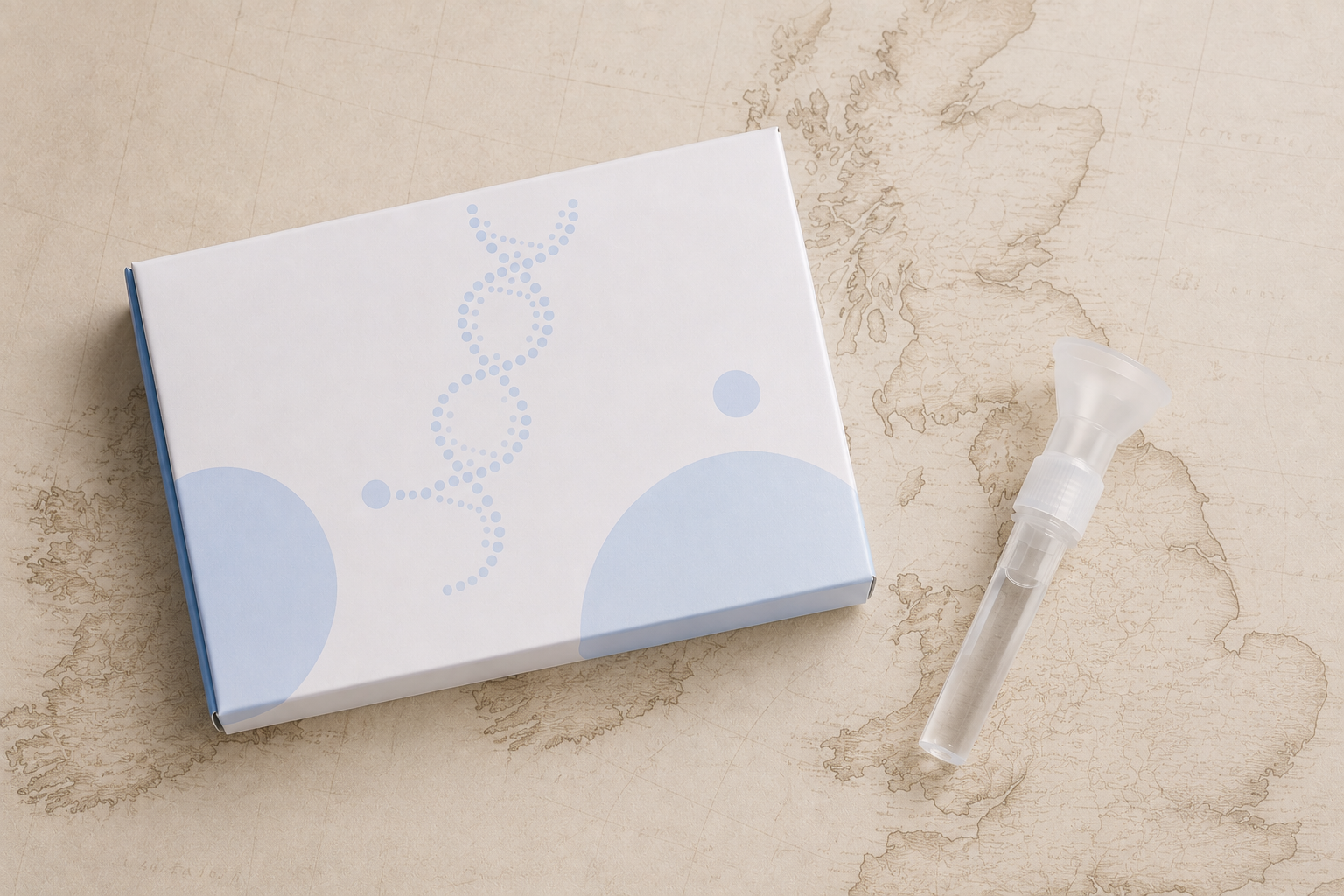
Living DNA uses a cheek swab rather than a saliva sample. You activate the kit online using the code included in the box, swab each cheek for about a minute, then seal and mail the sample back.
This is also where the brand’s slower pace shows up. The stated turnaround is six to eight weeks, but it’s worth mentally budgeting for closer to ten if you’re testing during a busy period. Once results are ready, you’ll get an email, and everything — ancestry breakdown, matches, and any add-on reports you purchased — lives in your online account.
What Living DNA Does Better Than Almost Anyone
Regional detail within the British Isles is genuinely impressive
This is the whole reason to choose Living DNA over a bigger name. Instead of a single “British Isles” blob, the ethnicity breakdown can point to specific sub-regions — over 21 distinct regions within the British Isles alone, a level of granularity most competitors simply don’t offer.
If your family history runs through England, Scotland, Ireland, or Wales, this specificity can turn a vague family story into something you can actually trace on a map, right down to which historical county your ancestors likely lived in.
It tests more than just autosomal DNA
Living DNA looks at autosomal, Y-DNA, and mitochondrial DNA together, giving you insight into both your paternal and maternal lines in a single kit. Some competitors charge extra or require separate tests to get this same breadth — here, it’s included in the standard ancestry kit.
Privacy practices are refreshingly clear
Compared to some competitors where data-sharing settings are buried in menus, Living DNA is upfront about consent, and it’s straightforward to delete your data or opt out of research use later if you change your mind. The onboarding process walks you through each choice individually, rather than bundling everything into one blanket agreement.
The wellbeing add-on is a nice extension
For people who want to go beyond ancestry, Living DNA offers a separate wellbeing report covering nutrition, fitness, and lifestyle-related genetic traits. It’s not a replacement for a dedicated health-testing kit, but it’s a reasonable add-on if you’re already testing for ancestry and curious about the extra layer.
Where It Falls Behind
The database is smaller
Fewer total users means fewer potential relative matches — meaningfully fewer than what AncestryDNA or 23andMe can offer, especially outside the UK and Europe. If new-relative discovery is your main goal, this is the biggest tradeoff to weigh.
Turnaround time tests your patience
Six to eight weeks is the stated window, and some users report it stretching closer to twelve. If you want quick answers — say, for a gift where the recipient is excited to see results soon — this isn’t the kit for that.
Less useful outside its specialty
If your ancestry isn’t rooted in the UK or Europe, you’re not getting the thing Living DNA does best. You’d likely get more detail, and probably faster results, elsewhere.
What You’re Actually Paying For
Living DNA sits in the mid-range price bracket — not the cheapest option, but not the most expensive either. The core ancestry kit covers the regional breakdown and the Y-DNA/mtDNA analysis; a separate wellbeing add-on covers nutrition and fitness-related traits if you want to go beyond ancestry.
So, Is It Worth It?
If you have known roots in the UK, Ireland, or elsewhere in Europe and you want more than a broad regional guess, yes — this is one of the few kits built specifically for that level of detail. The wait is real, but so is the payoff for the right audience.
If your ancestry lies elsewhere, or you’re mainly hunting for new relatives, you’ll likely be better served by a kit with a bigger overall database.
Frequently Asked Questions
How long does Living DNA actually take? The company states six to eight weeks, though some customers report closer to ten to twelve weeks depending on season and lab volume.
Does Living DNA test Y-DNA and mtDNA? Yes, and unlike many competitors, both are included in the standard ancestry kit rather than sold as separate add-ons.
Is Living DNA good if I’m not from the UK or Europe? It’s usable, but you won’t get the same depth of regional detail that makes this brand stand out. A kit with a larger, more globally distributed database will likely serve you better in that case.
Final Take
Living DNA isn’t trying to out-database AncestryDNA, and it doesn’t need to. It picked a lane — deep regional detail for the British Isles and Europe — and it delivers on that promise better than most. Know what you’re signing up for, and the wait feels worth it.
コメントを残す